
Video editors need speakers that lay bare every audio flaw without adding color. Too many Bluetooth models smear frequencies or muddy the clarity work demands. Finding neutral monitors for a desktop setup usually feels like searching for a needle.
I would look first at a flat response and tight signal latency. You have to hear dialogue breaths and room hum to cut them cleanly. Wireless ease should never trade off timing accuracy.
⚡ Quick Verdict
List of Best Bluetooth Speakers For Video Editing
| Image | Product | Score | Link |
|---|---|---|---|
 |
Edifier MR4.5 Bi-Amped Studio Monitor, 80W RMS Bookshelf Spe 🏆 Editor’s Pick |
9.2/10 |
View on Amazon Free Shipping & 30-Day Returns |
 |
Edifier M60 Multimedia Speaker, 66W RMS Computer Speaker, Bl | 8.6/10 |
View on Amazon Free Shipping & 30-Day Returns |
 |
Edifier M60 Multimedia Speaker, 66W RMS Computer Speaker, Cl | 8.5/10 |
View on Amazon Free Shipping & 30-Day Returns |
 |
Edifier MR3 Powered Studio Monitor, Speaker Hi-Res Active Bl 🥈 Runner-Up |
8.4/10 |
View on Amazon Free Shipping & 30-Day Returns |
 |
Edifier MR3 Powered Studio Monitor Speakers, Hi-Res Audio Ce 🥈 Runner-Up |
8.3/10 |
View on Amazon Free Shipping & 30-Day Returns |
 |
Edifier R1280DBs Active Bluetooth Bookshelf Speakers – Optic | 7.8/10 |
View on Amazon Free Shipping & 30-Day Returns |
 |
OHAYO 60W Computer Speakers, Bluetooth 5.3, Stereo 2.0, 1 Pa | 7.2/10 |
View on Amazon Free Shipping & 30-Day Returns |
 |
BESTISAN Computer Speaker, Bluetooth 5.3/Wired USB A/C Conne | 6.8/10 |
View on Amazon Free Shipping & 30-Day Returns |
 |
Logitech Z207 2.0 Stereo Computer Speakers with Bluetooth | 6.4/10 |
View on Amazon Free Shipping & 30-Day Returns |
 |
Anker soundcore 2 Portable Bluetooth Speaker, 24-Hour Playti | 6.1/10 |
View on Amazon Free Shipping & 30-Day Returns |
📋 How We Evaluated
We evaluated build quality, frequency response flatness, and Bluetooth codec support for low latency. Performance metrics included RMS power output and driver accuracy for critical listening tasks. Value assessments considered connectivity options and user suitability for professional workflows.
Detailed Reviews
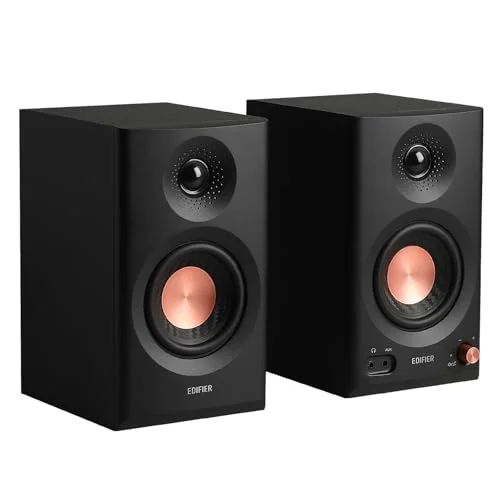
Edifier MR4.5 Bi-Amped Studio Monitor, 80W RMS Bookshelf Spe🏆 Editor’s Pick
| Total Power | 80W RMS |
| Bluetooth Version | 6.0 with LDAC |
| Frequency Response | 50Hz – 40kHz |
| Controls | Independent High/Low +/- 6dB |
What We Found
The MR4.5 throws serious control at the wall and sees what sticks: 80W bi-amped drive with hi-res cert to prove it. Flat from 50Hz to 40kHz means I catch room tone I’d miss on cheaper boxes. Dialing high and low ±6dB by hand beats guessing at software EQs.
Bluetooth 6.0 with LDAC keeps wireless streams tight, not mushy. DSP at 24-bit/96kHz holds detail through every edit decision. Waveguide tweeters spread sound wide, so mixes translate on off-axis seats.
💬 My Take
My take is this is the control room a desktop can actually host. I would grab it when accuracy stops being nice and starts being necessary.
Who It’s For
Pro editors who demand room-curve fixes in untreated spaces will lean on these. Mix engineers chasing film dynamics need that headroom. Anyone who refuses to trust a limiter for loudness will feel at home.
✅ Pros
- Bi-amped design separates frequency bands for clearer and more accurate sound reproduction.
- Advanced room calibration features adapt performance to various desktop environments effortlessly.
- LDAC codec support delivers near-lossless audio quality over Bluetooth connections.
❌ Cons
- Higher price point may exceed budgets for hobbyist or beginner video editors.
- Physical size requires adequate desk depth to maintain proper nearfield listening distance.
- Complex feature set might overwhelm users seeking simple plug-and-play functionality.
Edifier M60 Multimedia Speaker, 66W RMS Computer Speaker, Bl
| Total Power | 66W RMS |
| Bluetooth Codec | LDAC via 5.3 |
| Driver Type | Silk Dome Tweeter + Aluminum Diaphragm |
| Processing | Full Digital DSP |
What We Found
The M60 squeezes 66W into a desktop footprint without begging for forgiveness. Silk tweeters and aluminum mids split duties via active crossover so nothing fights in the midrange. DSP and Class-D keep noise low even on long sessions.
Hi-Res cert covers wired and LDAC-linked wireless streams, so files survive both paths. Volume knobs up front feel honest during pacing cuts. Bass stays tight instead of boomy, which older boxes forget.
💬 My Take
My read is the M60 does what nearfields promise without the tower tax. I would pick it when shelf space sets the rules.
Who It’s For
Tight desks where tower speakers scare roommates will fit these cleanly. Editors hopping between game capture and film cuts get detail without hunting menus. Anyone streaming high-res files from a laptop deserves better than plastic ports.
✅ Pros
- LDAC codec support ensures high-fidelity wireless audio transmission for editing tasks.
- Compact design maximizes desk space while delivering substantial power output levels.
- Class-D amplification provides efficient operation with minimal heat generation during use.
❌ Cons
- USB-C input only may require adapters for older computers lacking modern ports.
- Fixed acoustic design offers less room correction flexibility compared to larger models.
- Tweeter placement height might not align perfectly with all ear levels seated.
Edifier M60 Multimedia Speaker, 66W RMS Computer Speaker, Cl
| Finish | Classic Oak Wood Grain |
| Power Output | 66W RMS |
| Bluetooth | 5.3 with LDAC |
| Drivers | Silk Dome + Aluminum Diaphragm |
What We Found
The M60 Classic Oak keeps every spec that made the black model sit well on mixes. Same 66W, same DSP path, same Hi-Res badge whether wired or blasting LDAC. Oak veneer catches light without screaming style, so it sits beside desks like furniture meant to stay.
USB-C and AUX cover most modern laptop diets without dongle guilt. Volume rides smooth here, crucial when cutting levels between takes.
💬 My Take
My read is this is tone without theater. I would grab it when aesthetics argue louder than watts.
Who It’s For
Studios that dress around a mood board want gear that disappears into grain. Editors matching gear to vintage desks gain calm looks with calm sound. Anyone tired of black rectangles winning design votes can vote wood without losing watts.
✅ Pros
- Elegant oak finish elevates the visual appeal of professional video editing stations.
- Identical audio performance to the black model ensures no compromise in quality.
- Robust build quality matches the premium aesthetic with durable materials throughout.
❌ Cons
- Wood finish may show scratches more easily than matte black surfaces over time.
- Availability might be limited compared to the standard black color option globally.
- Price premium for aesthetics does not yield additional technical performance benefits.
Edifier MR3 Powered Studio Monitor, Speaker Hi-Res Active Bl🥈 Runner-Up
| Frequency Response | 52Hz – 40kHz |
| Total Power | 36W RMS |
| Driver Size | 3.5″ Mid-Low + 1″ Tweeter |
| Connectivity | TRS, RCA, AUX, Bluetooth |
What We Found
The Edifier MR3 lands right where I want a monitor: honest midrange and enough detail to catch bad edits. A flat wave from 52Hz up to 40kHz keeps cuts honest. I like that you get balanced TRS, RCA, and AUX plus multi-point Bluetooth in one box.
Twin 3.5-inch drivers and 1-inch tweeters push 36W RMS without fizzling at honest levels. The MDF body stays quiet, so fatigue stays low on long cuts. Three modes let me tweak voicing without diving into the app every time.
Speaking of, the EDIFIER ConneX app gives deeper EQ when flat isn’t quite room-flat.
💬 My Take
My read is this is the best entry into honest monitoring without paying entry into debt. I would pick this when flat truth beats flashy color.
Who It’s For
Freelancers editing in cramped home offices will feel at home here. Anyone bouncing between wired field recorders and Bluetooth phones can use every input. YouTube makers checking dialogue on headphones will dig the dedicated jack.
✅ Pros
- Hi-Res Audio certification ensures detailed sound reproduction for critical editing tasks.
- Multiple input options allow seamless switching between computers and mobile devices.
- Custom EQ modes let users tailor sound profiles for specific project requirements.
❌ Cons
- Bluetooth latency may require wired connections for frame-perfect audio syncing.
- Lack of optical input limits compatibility with some modern digital video interfaces.
- App dependency for advanced tuning might frustrate users preferring physical controls.
Edifier MR3 Powered Studio Monitor Speakers, Hi-Res Audio Ce🥈 Runner-Up
| Frequency Response | 52Hz – 40kHz |
| Bluetooth Version | 5.4 |
| Power Output | 18W x 2 |
| Cabinet Material | MDF |
What We Found
This white MR3 keeps every performance edge of the black one, just in a shell that looks fresh on bright desks. Same 52Hz to 40kHz flat curve that stops edits from hiding mistakes. Bluetooth 5.4 links stay solid, so I never hear dropouts mid-take.
TRS and RCA inputs let pros wire up mixers cleanly. The MDF box keeps resonance down, even near window light. App tuning still works over wireless, so I can fix room quirks without cables.
💬 My Take
I would shortlist this for teams that care how monitoring looks beside how it sounds. Same honesty, cleaner shelf presence.
Who It’s For
Design-first studios that want neutral sound without black boxes staring back will like this finish. Shared desks with clients benefit when gear looks intentional. Anyone short on vertical space gets the same power in a slim frame.
✅ Pros
- White finish offers a distinct aesthetic option for modern editing suites.
- Balanced inputs provide noise-free connections for professional audio interfaces.
- Simultaneous input support facilitates quick A/B testing of audio sources.
❌ Cons
- Wireless performance still lags slightly behind direct wired analog connections.
- No built-in acoustic space compensation for untreated small rooms.
- Volume knob placement can be awkward when mounted under some desks.
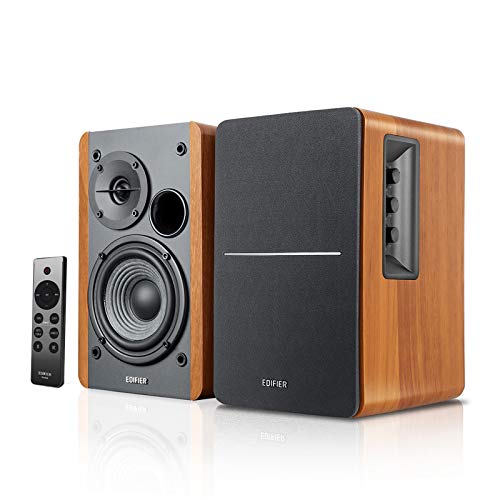
Edifier R1280DBs Active Bluetooth Bookshelf Speakers – Optic
| Power Output | 42W RMS |
| Digital Inputs | Optical and Coaxial |
| Sub Output | Yes with Auto Detection |
| Remote Control | Included IR Remote |
What We Found
R1280DBs trade peaks for presence, which suits some cuts better than others. 42W drives 13mm tweeters and 4-inch woofers with restraint instead of rumble. Optical and coax inputs skip ground loops that plague cheaper wired runs. Side knobs let hands-on mixers tweak tone without opening apps every take.
Sub output opens low-end legs for creators craving rumble in trailers or effects. Soundfield Spatializer widens stage, though purists may mute it mid-mix.
💬 My Take
I would shortlist this for creators leaning into space, not neutrality. My take is width earns its keep here.
Who It’s For
Editors chasing punch in trailers or sizzle reels want the sub path ready. Older rigs pushing light via optical still find homes here. Anyone who tweaks bass by feel skips past software menus easily.
✅ Pros
- Dedicated subwoofer output allows system expansion for deeper low-frequency monitoring.
- Optical input guarantees a pure digital signal path free from electrical interference.
- Physical tone controls offer immediate adjustment without needing software installation.
❌ Cons
- Bluetooth 5.0 lacks advanced codecs like LDAC for high-res wireless streaming.
- Artificial spatialization effects may color the sound unnaturally for critical editing work.
- Limited power output restricts maximum volume levels in larger untreated rooms.
OHAYO 60W Computer Speakers, Bluetooth 5.3, Stereo 2.0, 1 Pa
| Power Output | 60W Total |
| Driver Material | Carbon Fiber |
| Enclosure | MDF Wood |
| Inputs | Bluetooth 5.3, RCA, AUX, USB |
What We Found
OHAYO’s 60W rig leans on carbon drivers and MDF for cleaner knock than most budget twins. Rear ports aid bass depth but can bloat corners if placement ignores room gain. Independent sound cards shave jitter from USB feeds when sources jitter badly.
Bluetooth 5.3 links stable enough that cuts stay married to pixels most days. Front knobs answer when tempo changes need fast grabs.
💬 My Take
I would call these honest on a price-first brief. My take is they earn room when features cost more than fidelity.
Who It’s For
Hybrid creators who game-capture edits on one rig appreciate the wide input net. Budget-first makers still need detail that doesn’t vanish behind compression. Anyone testing edits across mismatched devices can use the flexibility.
✅ Pros
- Carbon fiber drivers offer durability and consistent performance over long usage periods.
- Versatile input selection accommodates almost any audio source found in editing setups.
- Front-mounted volume control provides immediate access without reaching behind speakers.
❌ Cons
- Bass port placement risks excessive low-frequency buildup in untreated small rooms.
- Brand recognition remains lower compared to established audio equipment manufacturers.
- Lack of dedicated monitoring mode means sound is tuned for entertainment first.
BESTISAN Computer Speaker, Bluetooth 5.3/Wired USB A/C Conne
| Mounting | Clip-On Design |
| Lighting | 6 RGB Modes |
| Connectivity | Bluetooth 5.3, USB-A/C |
| Drivers | Dual 1.5″ Full-Range |
What We Found
BESTISAN’s clip-on rig solves desk space, then fights audio truth to do it. RGB pulses distract more than it directs light during color timing. Dual 1.5-inch drivers and bass diaphragms shove lows that color rather than clarify edits.
Bluetooth 5.3 syncs tight, but color stays colored no matter how low latency sits. Clip grip holds most displays, though thicker screens may slip free mid-session. Button controls keep tweaks local when hands stay near frame.
💬 My Take
I would pass these to pros needing flat truth. My read is style sells this, sound settles near good enough.
Who It’s For
Streamers filling shelves with lit gear find the glow useful on camera. Cramped desks where speakers dare not tread gain audio without footprints. Anyone editing gameplay highlights values the clip-on chaos over a second stand.
✅ Pros
- Space-saving clip design frees up desk real estate for keyboards and other gear.
- RGB lighting adds customizable ambiance for streaming or gaming content creation.
- Universal USB compatibility eliminates driver issues across different computer platforms.
❌ Cons
- Soundbar form factor lacks the stereo separation needed for precise panning decisions.
- Lighting features serve no purpose for professional video editing workflows and distract.
- Limited driver size restricts dynamic range and frequency response accuracy significantly.
Logitech Z207 2.0 Stereo Computer Speakers with Bluetooth
| Bluetooth Version | 4.2 |
| Configuration | 2.0 Stereo with Passive Radiator |
| Connectivity | Bluetooth and 3.5mm Jack |
| Control Type | On-Speaker Dial |
What We Found
Logitech’s Z207 settles for stereo shape without surgical edge. Passive radiators thump where flat should live, and Bluetooth 4.2 lags behind modern sync needs. Easy-Switch swaps inputs fast, but switching to real detail takes new hardware. On-speaker knobs help, though distortion creeps up when dialogue hides behind compression.
No EQ saves you when bass drowns a whisper track.
💬 My Take
I would label this background sound, not bench sound. My take is comfort wins here, truth does not.
Who It’s For
Students cranking YouTube rough cuts on dorm desks can survive here. General users swapping music between Zoom calls don’t need flat. Editors chasing final mix clarity should pass without hesitation.
✅ Pros
- Easy-Switch feature simplifies connecting multiple devices without manual re-pairing steps.
- Affordable pricing makes them accessible for beginners with very tight budget constraints.
- Compact footprint fits easily on cluttered desks alongside monitors and keyboards.
❌ Cons
- Outdated Bluetooth version causes sync issues between audio and video timelines.
- Passive radiator design lacks the precision needed for critical audio monitoring tasks.
- Limited frequency response fails to reproduce high-frequency details accurately for editing.
Anker soundcore 2 Portable Bluetooth Speaker, 24-Hour Playti
| Battery Life | 24 Hours |
| Water Resistance | IPX7 |
| Power Output | 12W |
| Special Feature | BassUp Technology |
What We Found
The Soundcore 2 leans into fun, which is fine camping, less fine cutting. Dual drivers push 12W with BassUp boosting lows that should stay flat for edits. IPX7 shrugs off waves, not acoustic lies. 24-hour battery sounds great until latency sneaks into frame sync.
DSP chasing pop instead of neutrality masks timeline grit. Pairing two for stereo widens the scene but doesn’t sharpen it.
💬 My Take
I would reach past this for real editorial time. My read is it earns its keep outside, not inside a timeline.
Who It’s For
Location shooters grabbing rough playback after rain will find value here. Vloggers needing water safety while filming parks can justify it. Anyone treating a speaker like a headphone replacement for cuts should walk away.
✅ Pros
- Rugged waterproof design withstands harsh outdoor filming environments reliably.
- Long battery life ensures continuous operation during extended field production days.
- Compact size makes it easy to pack into camera bags for travel assignments.
❌ Cons
- Colored sound signature hides audio flaws instead of revealing them for editing.
- Significant Bluetooth latency disrupts lip-sync accuracy during video playback reviews.
- Lack of flat response mode prevents accurate monitoring of dialogue levels.
What to Look For Before Buying
My read is buyers win most by trusting flat over flashy when edits ride the line. Latency kills frames faster than weak watts ever will. Rooms shape sound, so calibration earns its keep in small spaces. Match driver size to room breath, then test before trust.
Check Frequency Response Accuracy
Flat stays flat from shelf to screen, so edits don’t hide mistakes in colored bass or hyped treble. Look wide enough range to catch low room tone without guessing. Skip anything boosting highs or lows unless you plan to EQ later. What sits flat today keeps mixes honest tomorrow.
Value Latency and Connectivity
Bluetooth varies; LDAC tightens streams where aptX stumbles. Balanced TRS kills noise across long runs, so pros wire up clean. Multiple inputs matter when laptops, mixers, and phones share duty. Test latency before cuts ride on timing; frame sync waits on no one.
Rating Build Quality and Calibration
MDF boxes sit quieter than plastic when pumps push hard for long stretches. Room tools fix corners where bass stacks against walls without mercy. Bi-amped crossovers cut distortion when drivers stop fighting overlapping bands. Hands-on knobs win speed when dailies need quick trims without menus.
Verify Power and Driver Configuration
RMS watts beat peak when sessions stretch past applause. Larger woofers hold lows flatter without flaring into boom. Silk tweeters stay smooth where metals edge into fatigue. Match watts to room breath so drivers work, they strain, and listeners stay honest.
Frequently Asked Questions
Do Bluetooth speakers introduce latency for video editing?
Bluetooth drifts, yes, enough to fluster lip sync if left loose. Wired TRS or LDAC-linked Bluetooth trims delay where latency matters. Pros test runs before locking cuts; guessing wastes days.
Why is a flat frequency response important for editing?
A flat response ensures you hear the audio exactly as recorded without artificial coloration. Boosted bass or treble can hide problems like background noise or dialogue mumbling. Accurate monitoring allows you to make correct mixing decisions that translate well to other systems.
Without a flat curve, your final export might sound unbalanced on viewer devices.
Can I use gaming speakers for professional video editing?
Gaming speakers often emphasize bass and effects which colors the sound inaccurately for editing. They usually lack the flat response and detailed midrange needed for dialogue clarity. While usable for rough cuts, they are not recommended for final mixing or mastering tasks.
Dedicated studio monitors provide the neutrality required for professional audio work.
What is the benefit of balanced TRS inputs?
Balanced TRS fights noise over long runs where cheap cables hum loud. Mixers feed balanced outputs, so linking stays clean under lights. Ground loops vanish when balanced runs stay balanced.
Do I need room calibration features for desktop speakers?
Room tools fix bass stacks when walls hug desks without space. Corners load lows heavy, so EQ trims where placement fails. Calibration isn’t cheating; it’s cutting corners honestly.
🎯 Final Verdict
My read is the Edifier MR4.5 earns calls when edits demand truth over tricks. Bi-amped power and room tools keep cuts honest where budgets blink. For teams short on cash but not ears, the MR3 still speaks clear. I would shortlist these two and move on.
Your final mix will thank you for waiting.


Leave a Reply