
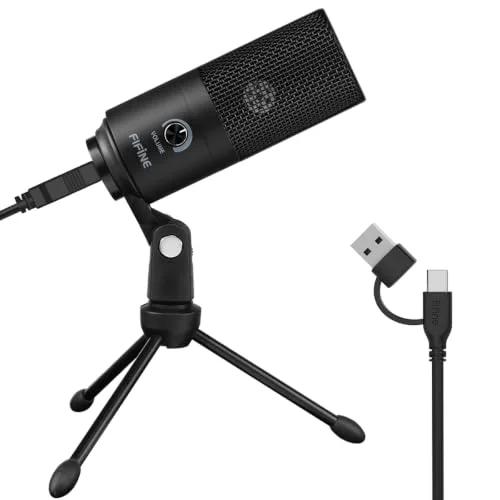
I looked at ten studio microphones marketed to Mac users and noticed the real friction isn’t sound quality, it’s the connection. Most USB mics here assume a USB-A port, while Macs increasingly ship with USB-C only. One listing even targets the Mac mini specifically.
I treated each listing’s capsule type, pickup pattern, and bundled accessories as the deciding factors. A cardioid condenser with a double pop filter suits a quiet room; a dynamic hybrid with noise-reduction handles a noisier space. Check the port before you buy.
⚡ Quick Verdict
List of Best Studio Microphone For Mac
| Image | Product | Score | Link |
|---|---|---|---|
 |
MAONO PD200W Hybrid Wireless Podcast Microphone for PC, Dyna 🏆 Editor’s Pick |
9.0/10 |
View on Amazon Free Shipping & 30-Day Returns |
 |
Shure SM58 Pro XLR Dynamic Vocal Microphone | Cardioid dynam 👑 Premium Pick |
8.8/10 |
View on Amazon Free Shipping & 30-Day Returns |
 |
FIFINE AmpliTank K688 Dynamic Microphone, XLR/USB Podcast Re | 8.4/10 |
View on Amazon Free Shipping & 30-Day Returns |
 |
FIFINE T669 Studio Condenser USB Microphone for Recording Po 🥈 Runner-Up |
8.3/10 |
View on Amazon Free Shipping & 30-Day Returns |
 |
ZealSound Podcast Microphone for PC, USB Mic with Noise Redu | 8.1/10 |
View on Amazon Free Shipping & 30-Day Returns |
 |
Dejasound Upgraded Studio Recording Microphone with Isolatio | 7.8/10 |
View on Amazon Free Shipping & 30-Day Returns |
 |
FIFINE K669B USB Microphone, Condenser Recording Mic for Voc 💵 Budget Pick |
7.6/10 |
View on Amazon Free Shipping & 30-Day Returns |
 |
MAONO AU-A04H USB Microphone Kit with Headphone for PC, Podc | 7.4/10 |
View on Amazon Free Shipping & 30-Day Returns |
 |
FIFINE K669 Blue USB Computer Microphone for Recording Voice | 7.3/10 |
View on Amazon Free Shipping & 30-Day Returns |
 |
DUNGZDUZ USB C Mini Microphone for Mac mini Pro Studio M4/M5 | 6.8/10 |
View on Amazon Free Shipping & 30-Day Returns |
📋 How We Evaluated
The comparisons consider listed construction, connection options, controls, included accessories, and intended recording uses. Performance claims reflect supplied product details, while price and Amazon rating data were unavailable for these listings. Suitability depends on the user’s Mac ports, room acoustics, and recording goals.
Detailed Reviews
MAONO PD200W Hybrid Wireless Podcast Microphone for PC, Dyna🏆 Editor’s Pick
| Microphone Type | Dynamic |
| Connections | Wireless, USB, and XLR |
| Signal-to-Noise Ratio | 82 dB |
| Maximum SPL | 128 dB |
What We Found
The MAONO PD200W is the most versatile option in this group. It supports wireless, USB, and XLR connections, so a Mac user can begin with direct USB and later add an audio interface. Its 30 mm dynamic capsule and cardioid pattern are designed to focus on close vocals.
The listing specifies an 82 dB signal-to-noise ratio and handling up to 128 dB SPL. Three-stage noise cancellation and MaonoLink software add control over sound character, including EQ and reverb. One receiver can connect two wireless microphones, with separate tracks for interviews. Camera and Lightning accessories are sold separately.
This flexibility comes with more setup complexity than a basic USB mic, and the listing provides no price or rating data.
💬 My Take
The PD200W is the best overall choice for Mac creators who want room to grow. Its connection flexibility is more useful than a long list of studio claims.
Who It’s For
This microphone fits creators who expect their setup to change over time. A solo podcaster can start over USB, while an XLR interface offers a path toward a more advanced studio. Wireless operation supports movement, and the dual-mic receiver option suits interviews when compatible components are available.
The dynamic capsule and noise-cancellation modes may help in ordinary rooms, though placement still matters. Buyers who only need occasional video calls may not use its broader feature set. Confirm what wireless accessories are included and budget for separately sold camera or Lightning connections.
✅ Pros
- Three connection methods support simple Mac use and later studio expansion.
- The dynamic capsule and noise-cancellation modes target vocal clarity in untreated rooms.
- The receiver can support two wireless microphones with separate recording tracks.
❌ Cons
- Some camera and Lightning accessories are sold separately.
- Wireless and software features may require more setup than basic USB models.
- No price or Amazon rating data is available to establish value.
Shure SM58 Pro XLR Dynamic Vocal Microphone | Cardioid dynam👑 Premium Pick
| Microphone Type | Dynamic vocal |
| Connection | XLR |
| Pickup Pattern | Cardioid |
| Pop Protection | Integrated grille and filter |
What We Found
The Shure SM58 is a professional XLR dynamic microphone built for vocals and repeated use. Its cardioid pattern focuses on sound from the front, while the tuned midrange aims to keep voices clear in a mix. A spherical grille and built-in pop filter help reduce breath and plosive noise.
The rugged metal construction and reinforced stand adapter suit live performance and studio work. Unlike the USB models here, the SM58 does not connect directly to a Mac. It requires an audio interface or mixer, plus an XLR cable and stand.
That extra equipment adds setup steps but offers a familiar path into an expandable recording chain. The supplied listing includes no price or rating data.
💬 My Take
The SM58 is a proven vocal workhorse, not a plug-and-play Mac mic. Choose it when durability and XLR workflow matter more than convenience.
Who It’s For
The SM58 is best for musicians, vocalists, and podcasters who already own or plan to buy an audio interface. It also suits users who need a durable microphone for both recording and live performance.
Its dynamic design can be useful in less-than-ideal rooms when the speaker works close to the grille. Mac beginners seeking a single-cable setup should choose a USB model instead. Buyers should include an interface, XLR cable, and stand in their budget.
Its long-standing professional use is a practical advantage, but it does not replace a complete recording chain.
✅ Pros
- The rugged metal construction suits regular studio and live-performance use.
- The cardioid pattern and integrated pop protection support close vocal recording.
- XLR connectivity fits established interfaces and expandable studio setups.
❌ Cons
- Direct Mac connection requires a separate audio interface or mixer.
- An XLR cable and stand are also needed for a complete setup.
- No price or Amazon rating data is available for comparison.
FIFINE AmpliTank K688 Dynamic Microphone, XLR/USB Podcast Re
| Microphone Type | Dynamic |
| Connections | USB and XLR |
| Maximum SPL | 130 dB |
| Monitoring | 3.5 mm jack in USB mode |
What We Found
The FIFINE AmpliTank K688 is a dynamic microphone with both USB and XLR outputs. USB provides a direct connection to a Mac, while XLR supports use with a compatible interface or mixer. Its metal construction and cardioid pickup pattern are intended for focused vocal recording.
The listing specifies a maximum SPL of 130 dB and a signal-to-noise ratio above 80 dB. USB mode adds tap-to-mute, gain adjustment, headphone monitoring, and headphone-volume control. Those controls do not apply to XLR operation. The package includes a windscreen, but not an arm, stand, or XLR cable.
Buyers should account for those additional items when comparing overall cost.
💬 My Take
The K688 is a credible step-up pick for users who want USB now and XLR later. Remember to budget for the stand and cable.
Who It’s For
The K688 suits podcasters and streamers who want a dynamic microphone with a straightforward USB starting point. It also works for Mac users planning to move to an XLR interface later.
The headphone jack and gain control are useful for checking levels over USB, while the metal body supports regular desk use. It may be a better fit than a sensitive condenser in an untreated room, provided the speaker stays close to the mic.
This listing excludes a stand and XLR cable, so the complete setup costs more than the microphone alone.
✅ Pros
- USB and XLR outputs accommodate both simple and interface-based Mac setups.
- USB mode includes mute, gain, and headphone-monitoring controls.
- The metal body and included windscreen support regular vocal use.
❌ Cons
- A stand, boom arm, and XLR cable are not included.
- Mute, gain, and monitoring features are available only over USB.
- No price or Amazon rating information is provided.
FIFINE T669 Studio Condenser USB Microphone for Recording Po🥈 Runner-Up
| Microphone Type | USB condenser |
| Pickup Pattern | Cardioid |
| Boom Arm Reach | 30 inches |
| USB Cable | 8.2 feet |
What We Found
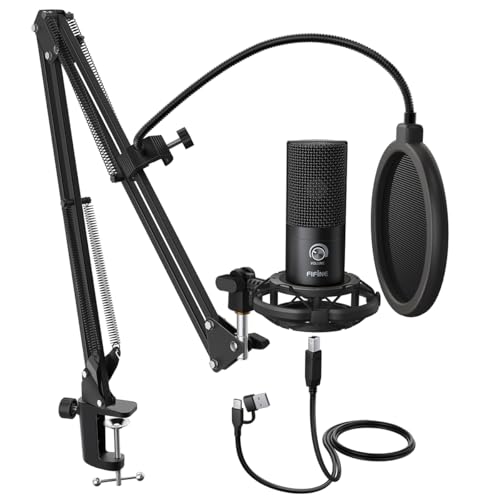
The FIFINE T669 stands out for its included recording accessories rather than advanced digital features. The kit pairs a USB condenser microphone with an all-steel scissor arm, shock mount, and double pop filter. Its cardioid capsule is intended to emphasize the speaker and reduce ambient pickup.
The arm rotates vertically and reaches about 30 inches, helping keep the microphone near the speaker without blocking the work area. An 8.2-foot USB cable connects to a computer without extra drivers. That makes it a convenient option for podcasting, voiceovers, and streaming on a Mac.
The listing does not provide a sample rate, monitoring jack, price, or rating. Xbox is not supported, and users must check their desk before attaching the clamp.
💬 My Take
The T669 is the strongest all-in-one starter kit here. Choose it for a ready-to-position desk setup, not for advanced monitoring or flexible connectivity.
Who It’s For
This kit suits home podcasters and voiceover creators who need a microphone positioned close to their mouth. The boom arm can free desk space and make recording posture more consistent than a small tripod.
The pop filters help reduce plosive bursts, while the shock mount can limit some handling and desk vibration. It also works for meetings or streaming when the arm stays installed. Buyers who travel often or switch between rooms may find the clamp setup inconvenient.
It offers strong accessory value if the included parts fit the desk and recording space.
✅ Pros
- The kit includes a steel boom arm, shock mount, and double pop filter.
- The arm’s reach supports closer placement while leaving the desk usable.
- Plug-and-play USB operation reduces setup requirements on a Mac.
❌ Cons
- The clamp requires a compatible desk edge and space for the arm.
- The listing gives no sample-rate or headphone-monitoring specifications.
- No price or Amazon rating data is provided for comparison.
ZealSound Podcast Microphone for PC, USB Mic with Noise Redu
| Microphone Type | USB condenser |
| Pickup Pattern | Cardioid |
| Sampling Rate | 48 kHz |
| Monitoring | 3.5 mm headphone jack |
What We Found
The ZealSound K66 Pro brings more hands-on controls than a basic USB microphone. It uses a cardioid condenser capsule with a listed 48 kHz sampling rate and minus 45 dB sensitivity. A touch control handles mute, while a separate long press activates noise reduction. Colored indicators distinguish those modes.
Dedicated knobs adjust gain, headphone volume, and echo, and a 3.5 mm jack supports zero-latency monitoring. RGB lighting adds a visible desktop accent, though it is not an audio feature. The listing claims compatibility with Mac, iPhone, and iPad, but the needed connection accessories may vary.
This mic targets streaming, calls, voiceovers, and commentary. No price or Amazon rating data is available.
💬 My Take
The K66 Pro offers the most convenient control set for casual streaming. Its feature-rich design is appealing, but the listing cannot verify real-world noise-reduction quality.
Who It’s For
The K66 Pro suits streamers, remote workers, and beginner podcasters who want local controls and direct headphone monitoring. Its mute button and visual status lights can help during live calls, while the gain and echo knobs allow quick adjustments.
Noise reduction may help in a busy space, though users should compare its sound with the default mode. The microphone works best on a dedicated desktop where its lighting and controls remain accessible. Buyers seeking a neutral studio signal may prefer fewer processing features.
Check device adapters and desk placement needs before ordering.
✅ Pros
- Independent gain, headphone-volume, and echo knobs provide convenient local adjustment.
- The mute control has visible indicators and a separate noise-reduction mode.
- A 3.5 mm jack supports zero-latency monitoring while recording.
❌ Cons
- The RGB lighting may not suit restrained or low-light desk setups.
- Noise-reduction behavior and sound quality lack independent test data here.
- No price or Amazon rating information is supplied.
Dejasound Upgraded Studio Recording Microphone with Isolatio
| Microphone Type | USB condenser |
| Pickup Pattern | Cardioid |
| Sampling Rate | 192 kHz/24-bit |
| Included Shield | Five foldable panels |
What We Found
The Dejasound DJM5 packages a USB condenser microphone with a foldable isolation shield. Its listed capsule is 16 mm, with a cardioid pattern, 192 kHz/24-bit sampling, and a 30 Hz to 16 kHz frequency response.
The microphone also includes echo and volume controls, a mute button, and a 3.5 mm monitoring jack. Five sound-absorbing panels form the shield, which measures about 27.55 by 10.23 inches. A tripod and pop filter are included, making this a broad accessory bundle for home recording.
The listing claims compatibility with computers and mobile devices, but connection requirements may differ. No price or rating data is available, and a shield cannot replace room treatment.
💬 My Take
The DJM5 is an accessory-heavy choice for creators who can use its shield. Treat the panel as a modest aid, not soundproofing.
Who It’s For
The DJM5 suits creators who want a microphone, basic monitoring, and a portable vocal shield in one package. It may work for voiceovers, podcasting, and streaming in a shared room where temporary separation is useful.
The foldable panels can be stored between sessions, although their size still needs desk or storage space. Buyers should set realistic expectations: a small shield may reduce some nearby reflections, but it cannot fully block room noise. Confirm phone or Mac adapter compatibility before purchase.
The overall value depends on the bundle price and the included accessories.
✅ Pros
- The kit combines a foldable shield, tripod, pop filter, and microphone.
- A 3.5 mm jack and physical controls support direct monitoring and adjustment.
- The listed specifications suit speech, voiceovers, and home recording.
❌ Cons
- The shield takes up space and cannot eliminate all room noise.
- The listed sampling rate does not prove superior real-world sound.
- No price or Amazon rating data is available.
FIFINE K669B USB Microphone, Condenser Recording Mic for Voc💵 Budget Pick
| Microphone Type | USB condenser |
| Pickup Pattern | Cardioid |
| Included Stand | Desktop tripod |
| Cable Length | 5.9 feet |
What We Found
The FIFINE K669B is a straightforward USB condenser microphone for Mac users who want a simple desktop setup. Its cardioid pattern focuses on sound from the front, which suits voice calls, streaming, and basic voiceovers. A built-in gain knob makes quick level adjustments easy without opening audio software.
The metal body and included tripod give it a sturdier feel than a lightweight plastic travel mic. Its 5.9-foot cable connects to USB-A, and the listing also describes a USB-C cable option. It does not require phantom power or separate drivers.
However, the listing provides no price or rating data, and the fixed desktop format offers less positioning flexibility than a boom arm. It is not compatible with phones or Xbox.
💬 My Take
A sensible starter mic for uncomplicated Mac recording. Its limited positioning and missing rating data make it a practical pick, not a standout studio upgrade.
Who It’s For
This model fits students, remote workers, and new creators who need a simple microphone for a Mac desk. It can handle meetings, voice chat, basic streaming, and occasional narration without an interface. The tripod is useful when desk space is available, and the gain knob helps manage voice levels quickly.
Buyers with USB-C-only Macs should confirm the cable arrangement before ordering. Those recording in noisy rooms may prefer a dynamic mic or a more adjustable setup. Its value depends on the actual checkout price, which was not supplied here.
✅ Pros
- The USB setup avoids an audio interface and phantom-power supply.
- A physical gain knob supports quick level changes during calls or recording.
- The metal body and tripod provide a stable, durable desktop arrangement.
❌ Cons
- The included tripod offers limited height and placement adjustment.
- The listing excludes phone compatibility and explicitly excludes Xbox.
- No price or Amazon rating data is available for judging value.
MAONO AU-A04H USB Microphone Kit with Headphone for PC, Podc
| Microphone Type | USB condenser |
| Sampling Rate | 192 kHz/24-bit |
| Frequency Response | 30 Hz to 16 kHz |
| Headphone Drivers | 50 mm |
What We Found
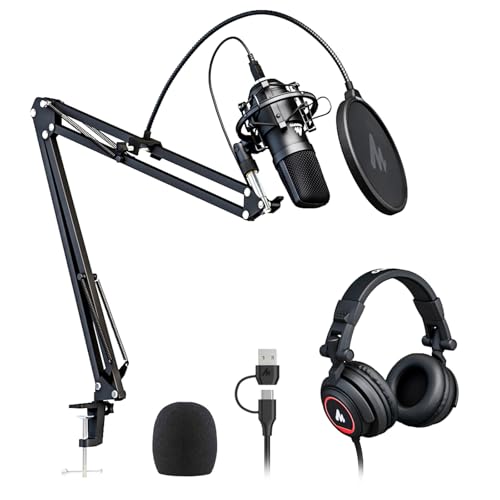
The MAONO AU-A04H combines a USB condenser microphone with headphones and a stated 192 kHz/24-bit sampling capability. Its 16 mm electret condenser transducer is paired with a listed 30 Hz to 16 kHz frequency response. USB 2.0 connection is described as driver-free, and the included cable has double shielding.
The kit also includes headphones with 50 mm drivers and a 3.5 mm jack. The listing mentions broad device compatibility, but Mac users should confirm the connection path and monitoring behavior for their setup. A high sampling-rate specification does not guarantee better recordings by itself.
This package suits entry-level voice work, but no price, rating, or detailed stand specifications were provided.
💬 My Take
A reasonable bundle for beginners who need headphones as well as a mic. The specification sheet is stronger than the supplied evidence about everyday performance.
Who It’s For
This kit is aimed at beginners who want a microphone and headphones together for home recording. It may suit podcast practice, gaming, voiceovers, and online video, particularly when separate audio gear is not already available.
The microphone’s USB connection keeps setup relatively simple, while the included headphones let users monitor or listen during sessions. Check whether the listed cable and adapters match the Mac’s ports. Buyers focused on room-noise rejection should consider microphone placement and acoustics, not just the sampling-rate figure.
Its value depends on the actual bundle price.
✅ Pros
- The bundle includes headphones, reducing the need to source monitoring gear separately.
- USB 2.0 operation is described as driver-free for computer recording.
- The listed 16 mm capsule and frequency range suit speech and basic vocal work.
❌ Cons
- A high sampling-rate specification alone does not establish recording quality.
- The listing does not clearly detail the included stand or Mac adapter requirements.
- No price or Amazon rating data is available.
FIFINE K669 Blue USB Computer Microphone for Recording Voice
| Microphone Type | USB condenser |
| Pickup Pattern | Cardioid |
| Cable Length | 6 feet, attached |
| Included Stand | Tripod with pivot mount |
What We Found
The blue FIFINE K669 is a compact USB condenser microphone with a cardioid pattern and front-facing gain knob. Its metal construction and matte blue finish distinguish it from the more basic black desktop models.
The package includes a tripod stand and pivot mount, allowing the microphone to angle toward the speaker. A permanently attached six-foot USB cable connects to a Mac or Windows computer without a separate driver. The listing says it does not require phantom power and excludes Xbox compatibility.
It also notes that USB-C-only laptops need an appropriate adapter. There is no headphone jack, monitoring feature, price, or rating data listed, so its appeal rests on simple recording and appearance.
💬 My Take
The blue K669 delivers simple recording with a more distinctive finish. Its fixed cable and lack of monitoring make it less flexible than newer alternatives.
Who It’s For
This microphone works for beginners who want an affordable-looking desktop setup for voiceovers, vlogging, calls, or basic singing. The tripod and pivot mount make initial positioning simple, while the gain knob helps adjust input without software menus.
Its blue finish may suit a coordinated desk, but the fixed cable limits replacement options. Users who record in quiet rooms are more likely to get the intended cardioid performance. For ongoing podcast work or noisy spaces, a boom-mounted or dynamic microphone may be more practical.
Check adapter needs for newer MacBooks.
✅ Pros
- The front gain knob supports quick input-level adjustments.
- The tripod and pivot mount make basic desktop positioning straightforward.
- The metal body has a distinctive matte blue finish.
❌ Cons
- The permanently attached cable cannot be replaced independently.
- USB-C-only Macs may need an adapter that is not specified in the listing.
- No headphone monitoring, price, or Amazon rating data is supplied.
DUNGZDUZ USB C Mini Microphone for Mac mini Pro Studio M4/M5
| Connection | USB-C |
| Microphone Type | Condenser |
| Included Case | Metal carrying case |
| Warranty | 12 months |
What We Found
The DUNGZDUZ mini microphone prioritizes a compact footprint and direct USB-C connection. Its listing targets Mac mini models and MacBooks, with use cases including dictation, calls, and online classes. The plug-and-play design avoids separate drivers or software.
A high-sensitivity condenser capsule is advertised for clear speech, though the listing provides no sample rate, pickup pattern, or measured performance data. The small body keeps the desk uncluttered, and a metal carrying case supports transport. A 12-month warranty is included.
This is a specialist convenience mic rather than a conventional studio setup: it has no listed stand, gain control, headphone jack, or detailed positioning options. Buyers should verify compatibility with their specific Mac and port layout.
💬 My Take
Choose this only when size and USB-C convenience lead the brief. Its sparse controls and limited published specifications make it a weak fit for serious studio work.
Who It’s For
This microphone is best for Mac users who value compactness over extensive recording controls. It may suit desk calls, short dictation sessions, and study use when a full-size stand would crowd the workspace.
The USB-C connection also avoids relying on a USB-A port, subject to the computer’s available ports and configuration. Its carrying case makes it easier to pack than a boom-arm kit. Vocalists, podcasters, and streamers needing precise placement or live monitoring should look elsewhere.
The warranty adds some reassurance, but no price or customer-rating data was supplied.
✅ Pros
- The compact body takes up little desk space and travels easily.
- USB-C plug-and-play operation is convenient for compatible Mac computers.
- A metal carrying case and 12-month warranty are included.
❌ Cons
- The listing provides no sample rate, pickup pattern, or measured audio data.
- No gain knob, headphone jack, or stand is listed.
- Its advertised Mac model compatibility should be verified before purchase.
What to Look For Before Buying
Start by matching the microphone to the recording task and the room. Mac compatibility depends on connection type, available ports, and any required interface or adapter. Then compare control features and included accessories, since a bare microphone may need extra purchases.
Published specifications help narrow options, but they cannot replace a suitable setup and careful placement.
Check Match the Connection to Your Mac
Check whether the microphone connects through USB-A, USB-C, or XLR. USB models usually connect directly, but port adapters may still be necessary. XLR microphones require an interface or mixer with a Mac-compatible connection. Confirm that the interface supplies any required phantom power for condenser microphones.
Review the exact cable and accessory list before buying.
Value Choose for Your Room and Recording
Condenser microphones can capture detailed speech, but room reflections and background noise may also become more noticeable. Dynamic microphones can suit close vocal work in less-treated spaces. Cardioid pickup focuses on sound from the front, so position the speaker toward the capsule.
Keep the microphone close enough for a clear voice without obstructing the workflow. A shield can help with nearby reflections, but it does not soundproof a room.
Rating Compare Useful Features and Evidence
Look for practical controls such as gain adjustment, mute, and headphone monitoring. A zero-latency monitoring jack can help catch problems while recording. Sample-rate figures do not guarantee good sound on their own. Check whether the listing provides credible rating data and enough technical detail.
When ratings are missing, treat marketing claims cautiously and compare build, connectivity, and accessories instead.
Verify Account for the Complete Setup
Compare the full cost, not only the microphone price. A boom arm, stand, pop filter, cable, or interface may be sold separately. Consider how much desk space an arm or isolation shield requires. A compact mic can suit calls but may lack controls needed for production.
Check return terms and warranty details when specifications or compatibility remain unclear.
Frequently Asked Questions
Can a USB microphone connect directly to a Mac?
Many USB microphones work with a Mac through plug-and-play audio input. The available port still matters, since some models use USB-A and newer computers may require an adapter. Select the microphone in macOS sound settings and in the recording application. Confirm compatibility details for the exact model before ordering.
Is a condenser or dynamic microphone better for Mac recording?
Neither type is automatically better for every user. Condensers are common for detailed voice capture, while dynamic models often suit close vocals and less-treated rooms. Room noise, microphone distance, and speaking technique affect results. Choose based on the recording environment and intended use.
Does an XLR microphone work without an audio interface?
An XLR microphone such as the Shure SM58 does not connect directly to a Mac as a standard USB mic does. It needs an audio interface or mixer that connects to the computer. The interface converts the microphone signal into a usable computer input.
Include the interface, cable, and stand in the overall budget.
Do high sample rates guarantee better microphone sound?
No. A high sample-rate specification does not guarantee clear recordings or better room performance. Capsule design, placement, background noise, and recording technique also matter. Compare practical features and reliable review evidence alongside technical figures.
What features matter most for podcasting on a Mac?
Prioritize a compatible connection, comfortable microphone placement, and a sound that suits the room. A mute control and headphone monitoring can help during live sessions. A boom arm, shock mount, or pop filter may improve convenience. For interviews, check whether the system supports separate microphone tracks.
🎯 Final Verdict
The MAONO PD200W is the strongest overall choice for Mac creators who want flexibility beyond a basic USB setup. Its wireless, USB, and XLR options support different workflows, while the dynamic capsule and noise-cancellation modes target clear vocals.
The FIFINE T669 is a more straightforward alternative, especially for buyers who need an included boom arm and pop filters. Neither listing supplies price or rating data, so compare current checkout details before deciding.
Choose the PD200W when expansion matters, then confirm included accessories and connection requirements before placing an order.

Leave a Reply