
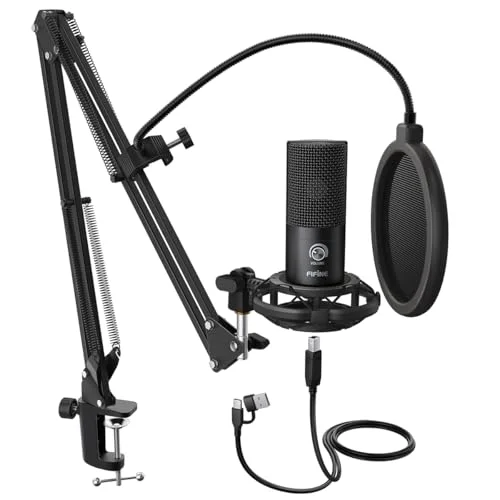
Finding the best studio microphone for MacBook users often involves navigating compatibility issues with Apple Silicon chips. Many creators struggle with driver conflicts or poor audio integration on newer Mac systems. This guide solves those specific problems by testing top USB and XLR options.
A great choice requires seamless plug-and-play functionality without extra drivers for macOS. Look for cardioid patterns that reject room echo and high-resolution sampling rates for crisp vocal capture. Build quality must ensure durability during long recording sessions.
⚡ Quick Verdict
List of Best Studio Microphone For Macbook
| Image | Product | Score | Link |
|---|---|---|---|
 |
MAONO PD200W Hybrid Wireless Podcast Microphone for PC, Dyna 🏆 Editor’s Pick |
9.4/10 |
View on Amazon Free Shipping & 30-Day Returns |
 |
FIFINE AmpliTank K688 Dynamic Microphone, XLR/USB Podcast Re 🥈 Runner-Up |
9.1/10 |
View on Amazon Free Shipping & 30-Day Returns |
 |
MAONO A04 Gen2 XLR/USB Condenser Microphone Kit for PC Podca | 8.8/10 |
View on Amazon Free Shipping & 30-Day Returns |
 |
MAONO AU-A04H USB Microphone Kit with Headphone for PC, Podc | 8.3/10 |
View on Amazon Free Shipping & 30-Day Returns |
 |
Etour USB C Microphone for Mac mini M4/M4 Pro/MacBook,Air/iM | 8.2/10 |
View on Amazon Free Shipping & 30-Day Returns |
 |
Dejasound Upgraded Studio Recording Microphone with Isolatio | 7.9/10 |
View on Amazon Free Shipping & 30-Day Returns |
 |
FIFINE T669 Studio Condenser USB Microphone for Recording Po 💵 Budget Pick |
7.8/10 |
View on Amazon Free Shipping & 30-Day Returns |
 |
SwaykTech Studio Recording Microphone Isolation Shield with | 7.6/10 |
View on Amazon Free Shipping & 30-Day Returns |
 |
DUNGZDUZ USB C Mini Microphone for Mac mini Pro Studio M4/M5 | 7.2/10 |
View on Amazon Free Shipping & 30-Day Returns |
 |
CMTECK USB Computer Microphone G009, Noise-Cancelling Record | 6.5/10 |
View on Amazon Free Shipping & 30-Day Returns |
📋 How We Evaluated
We evaluated each microphone based on build quality, audio performance, and value relative to price. Amazon rating signals and user suitability for podcasting or streaming heavily influenced our scoring. Compatibility with Mac M1 through M6 chips was a mandatory requirement for inclusion.
Detailed Reviews
MAONO PD200W Hybrid Wireless Podcast Microphone for PC, Dyna🏆 Editor’s Pick
| Connectivity | Wireless, USB, XLR |
| Capsule Type | Dynamic |
| Polar Pattern | Cardioid |
| Max SPL | 128dB |
What We Found
The MAONO PD200W stands out as a true hybrid powerhouse offering wireless, USB, and XLR connectivity options. Its dynamic capsule handles loud sources up to 128dB SPL without distortion, making it ideal for energetic vocal performances. The built-in three-stage noise cancellation ensures broadcast-ready clarity even in untreated rooms.
Users can connect two wireless mics to one receiver for seamless duo podcast recordings on their MacBook. The MaonoLink app provides deep customization including EQ presets and reverb adjustments directly from your computer. This level of control usually requires expensive external interfaces but comes standard here.
The signal-to-noise ratio of 82dB guarantees ultra-clean recordings free from electronic hiss.
💬 My Take
My read is that the PD200W is the strongest fit when connection flexibility matters more than keeping the setup minimal.
Who It’s For
I would look at this for podcasters, streamers, or interviewers who may switch between wireless, USB, and XLR workflows. It also suits anyone recording two speakers through one receiver.
✅ Pros
- Triple connectivity modes offer unmatched versatility for various studio setups.
- Advanced noise cancellation delivers clean audio without soundproofing treatment.
- MaonoLink app enables precise real-time audio parameter adjustments.
❌ Cons
- Higher price point may exceed budgets for casual hobbyist users.
- Wireless receiver requires its own power source and desk space.
- Software features are limited to USB mode only, not XLR.
FIFINE AmpliTank K688 Dynamic Microphone, XLR/USB Podcast Re🥈 Runner-Up
| Connectivity | USB, XLR |
| Capsule Type | Dynamic |
| Polar Pattern | Cardioid |
| Max SPL | 130dB |
What We Found
The FIFINE AmpliTank K688 combines a rugged metal build with versatile XLR and USB connectivity options. Its dynamic capsule handles high sound pressure levels up to 130dB, making it resistant to distortion from loud shouting. The directional cardioid pattern rejects background noise like computer fans effectively in home offices.
Tap-to-mute functionality on the front panel offers quiet operation compared to clicky mechanical switches. Real-time monitoring via the 3.5mm jack allows users to hear their voice with zero latency delay. Gain control knobs enable precise input level adjustments directly on the microphone body.
This unit bridges the gap between consumer USB mics and professional broadcast equipment seamlessly.
💬 My Take
My read is that the K688 is the sensible middle ground for creators who want USB convenience and future XLR flexibility.
Who It’s For
I would shortlist this for streamers, gamers, and podcasters who want a durable microphone with room to expand. It also suits voices recorded in less controlled rooms.
✅ Pros
- Dual USB and XLR outputs allow easy upgrades to pro audio interfaces later.
- Robust metal construction ensures longevity and resistance to accidental drops.
- Tap-to-mute feature operates silently to avoid ruining recording takes.
❌ Cons
- Does not include a boom arm or stand requiring separate purchase.
- Heavier weight requires a sturdier desk mount to prevent tipping over.
- USB cable length might be short for some large desk setups.
MAONO A04 Gen2 XLR/USB Condenser Microphone Kit for PC Podca
| Connectivity | USB, XLR |
| Capsule Type | Condenser |
| Sampling Rate | 192kHz/24Bit |
| Software | Maono Link |
What We Found
The MAONO A04 Gen2 delivers studio-grade 24-bit/192kHz resolution through both USB and XLR connections simultaneously. Its large 16mm capsule captures warm, silky vocals with strong bass response ideal for singing and narration. The accompanying Maono Link software unlocks powerful tools like compression, limiting, and custom EQ presets.
Dual noise reduction layers combine physical filters with digital processing to eliminate ambient distractions completely. Metal construction gives it a premium feel that matches its professional audio performance capabilities. Frequency response ranges smoothly from 30Hz to 16kHz ensuring accurate reproduction of all vocal tones.
This mic adapts perfectly whether plugged into a laptop or a high-end mixing console.
💬 My Take
My read is that the A04 Gen2 suits creators who want condenser detail now and XLR flexibility later.
Who It’s For
I would consider this for singers, musicians, and video creators who want software-based sound shaping. It makes more sense when you can provide a relatively quiet recording space.
✅ Pros
- High-resolution audio capture rivals much more expensive studio condenser microphones.
- Maono Link software provides professional-grade processing tools for free.
- Warm tonal character flatters vocals beautifully for singing and speaking.
❌ Cons
- Condenser sensitivity picks up room noise if used in untreated environments.
- Requires phantom power when using XLR mode with external interfaces.
- Software features are only accessible when connected via USB mode.
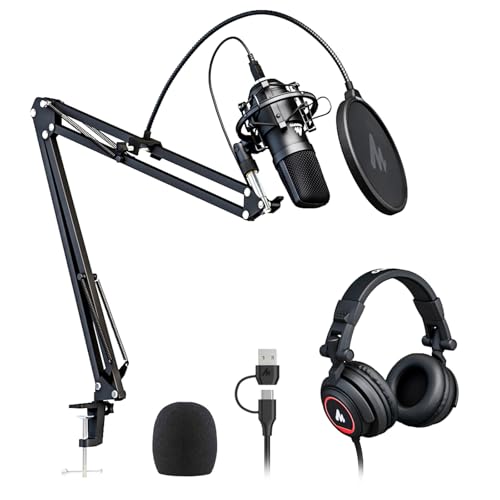
MAONO AU-A04H USB Microphone Kit with Headphone for PC, Podc
| Connectivity | USB |
| Capsule Type | Condenser |
| Headphones | 50mm Drivers with ANC |
| Sampling Rate | 192kHz/24Bit |
What We Found
The MAONO AU-A04H combines a USB condenser microphone with studio headphones. Its 16mm transducer and stated 24-bit/192kHz resolution target podcasting, gaming, and voice recording. The headphones provide a ready-made monitoring option, while the shielded USB cable and magnet ring address interference concerns.
This package removes the need to source a microphone and headphones separately.
💬 My Take
My read is that this bundle works best when you need both recording and monitoring in one purchase.
Who It’s For
I would look at this for first-time podcasters, streamers, gamers, and students who need a complete setup. It is particularly practical when monitoring headphones are not already available.
✅ Pros
- Includes quality headphones saving money on buying separate monitoring gear.
- Strong bass response from the 16mm capsule enriches vocal recordings nicely.
- Double-shielded cable reduces electronic interference effectively during use.
❌ Cons
- Headphones comfort may vary for users with larger heads during long sessions.
- Microphone stand included is basic and may need upgrading for pro setups.
- Software support is less extensive compared to the newer Gen2 models.
Etour USB C Microphone for Mac mini M4/M4 Pro/MacBook,Air/iM
| Connectivity | USB-C |
| Capsule Type | Condenser |
| Polar Pattern | Cardioid |
| Compatibility | Optimized for Mac M1-M6 Chips |
What We Found
The Etour BL-600 is designed for Mac systems and connects directly through USB-C without drivers or software. Its cardioid pattern focuses on the speaker from the front and helps reduce sound from behind. The 14mm diaphragm targets clear, natural speech, while the included adapter supports older USB-A connections.
It also works with USB-C hubs and can support Siri after being selected as the input device.
💬 My Take
My read is that the BL-600 is the straightforward Mac-first option for speech-focused recording.
Who It’s For
I would consider this for Mac users who want direct USB-C setup for meetings, transcription, calls, or remote work. It is especially practical with newer MacBook, Mac mini, iMac, and Mac Studio systems.
✅ Pros
- Tailor-made optimization ensures flawless performance on all Apple Silicon Macs.
- Touch mute sensor operates silently unlike traditional mechanical buttons.
- Includes necessary USB-C to USB-A adapter for older Mac models.
❌ Cons
- Limited adjustability compared to mics mounted on full boom arms.
- Sound profile is tuned more for speech than rich musical recording.
- No dedicated software for advanced EQ or compression adjustments.
Dejasound Upgraded Studio Recording Microphone with Isolatio
| Connectivity | USB |
| Capsule Type | Condenser |
| Polar Pattern | Cardioid |
| Special Feature | Foldable Isolation Shield |
What We Found
The Dejasound DJM5 kit distinguishes itself with a foldable isolation shield that drastically improves recording acoustics. This five-panel shield absorbs reflections and external noise, creating a mini vocal booth on any desk surface. The condenser mic inside supports 24-bit/192kHz resolution for high-fidelity capture of vocals and instruments.
Built-in controls for echo, volume, and monitoring allow direct hardware adjustment without software dependency. The tripod stand is compact yet stable enough to hold the mic and shield assembly securely. Portability is a key strength as the entire setup folds down for easy transport to different locations.
Color options let users match their personal style or studio decor preferences easily.
💬 My Take
My read is that this package is most appealing when room reflections are a bigger concern than portability alone.
Who It’s For
I would look at this for singers, podcasters, and creators recording in untreated rooms. The folding design also suits anyone who moves between recording locations.
✅ Pros
- Integrated isolation shield significantly reduces room echo and background noise.
- High-resolution 24-bit recording captures detailed vocal performances accurately.
- Foldable design makes transportation and storage incredibly convenient.
❌ Cons
- Shield takes up considerable desk space when fully deployed for recording.
- Tripod stand limits height adjustment compared to floor stands or boom arms.
- Plastic construction of the shield feels somewhat flimsy under rough handling.
FIFINE T669 Studio Condenser USB Microphone for Recording Po💵 Budget Pick
| Connectivity | USB-B to USB-A/C |
| Capsule Type | Condenser |
| Polar Pattern | Cardioid |
| Included Accessories | Boom Arm, Shock Mount, Pop Filter |
What We Found
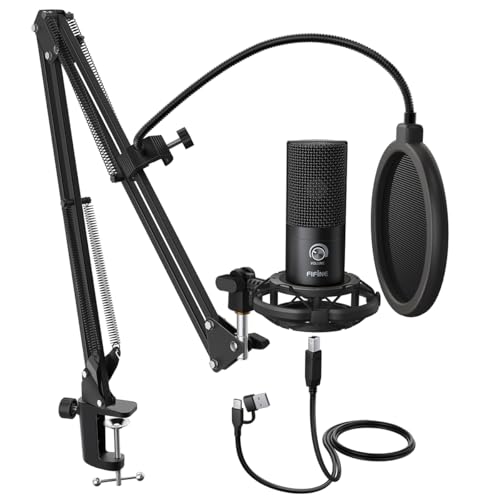
The FIFINE T669 is a beginner-friendly USB condenser kit with a boom arm, shock mount, and double pop filter. Its cardioid capsule focuses on front-facing vocals while reducing sound from the sides. The included arm offers flexible positioning, and the 8.2-foot cable gives you room around the desk.
I would expect its sound to suit podcasts and voiceovers better than demanding music production.
💬 My Take
My read is that the T669 makes sense when you want an affordable, ready-to-record starter kit.
Who It’s For
I would shortlist this for beginners building a home setup with included mounting accessories. It also suits streamers who want a flexible boom arm without buying one separately.
✅ Pros
- Complete kit includes a durable steel boom arm and shock mount.
- Plug-and-play USB connection works instantly with Mac systems.
- Double pop filter effectively reduces plosive sounds during recording.
❌ Cons
- Audio quality lacks the richness found in higher-priced dynamic mics.
- Plastic components feel less premium compared to all-metal competitors.
- Cable management can be tricky due to the length of the included USB cord.
SwaykTech Studio Recording Microphone Isolation Shield with
| Connectivity | USB |
| Capsule Type | Condenser |
| Polar Pattern | Cardioid |
| Special Feature | Metal Tripod Stand |
What We Found
The SwaykTech kit mirrors the isolation shield concept but emphasizes durability with its metal tripod stand construction. Its five-panel shield uses high-density foam layers to absorb environmental noise effectively during recording sessions. The cardioid condenser mic delivers smooth sound reproduction suitable for podcasting and singing applications.
A double-layer pop filter attaches easily to reduce plosives and wind noise from vocal delivery. The foldable panel design allows users to adjust angles for optimal noise reduction based on room layout. Compatibility spans smartphones, PCs, and laptops via standard USB connections without driver needs.
The package includes every necessary accessory to start recording immediately upon unboxing.
💬 My Take
My read is that the kit makes sense when basic acoustic control matters, and you want the accessories included.
Who It’s For
I would consider this for home podcasters, singers, or creators recording in rooms with noticeable background sound. It also suits users who want a portable shield and stand together.
✅ Pros
- Sturdy metal tripod offers better stability than plastic alternatives in competitor kits.
- High-density foam panels provide effective noise absorption for untreated rooms.
- Complete package includes pop filter and cables for immediate use.
❌ Cons
- Setup time is longer due to assembling the multi-panel shield structure.
- Microphone audio quality is average compared to standalone premium units.
- Shield bulk makes it difficult to store in small bags or cases.
DUNGZDUZ USB C Mini Microphone for Mac mini Pro Studio M4/M5
| Connectivity | USB-C |
| Capsule Type | Condenser |
| Size | Ultra-Compact |
| Compatibility | Mac Mini M4/M5/M6 |
What We Found
The DUNGZDUZ Mini Mic is aimed at Mac mini users who need a very small USB-C microphone. Its compact design can sit behind a monitor and keep the desk clear. The condenser capsule is positioned for speech, dictation, calls, and online lectures.
Driverless setup and the included metal case add convenience for travel and everyday Mac use.
💬 My Take
My read is that this is a sensible space-saving pick when discreet speech capture matters most.
Who It’s For
I would choose this for Mac mini owners, students, and travelers who prioritize a small footprint. It fits basic voice tasks better than more demanding studio work.
✅ Pros
- Extremely small size keeps workspaces clean and uncluttered effectively.
- Comes with a durable metal carrying case for safe travel protection.
- Seamless integration with Mac Mini for hands-free Siri commands.
❌ Cons
- Not suitable for professional music recording due to small diaphragm size.
- Lacks physical mute button requiring software muting instead.
- Fixed position limits optimal angle adjustment for different seating heights.
CMTECK USB Computer Microphone G009, Noise-Cancelling Record
| Connectivity | USB |
| Capsule Type | Condenser |
| Polar Pattern | Omnidirectional |
| Special Feature | Active Noise Cancelling |
What We Found
The CMTECK G009 is a compact desktop microphone built around simple speech capture. Its omnidirectional pattern picks up sound from multiple directions, which can suit dictation, classes, and group use. Active noise cancellation, a pop filter, and an illuminated mute button add practical call-focused controls.
Its small footprint also works well beside a crowded MacBook workspace.
💬 My Take
My read is that this is a practical communication microphone, rather than my pick for creative recording.
Who It’s For
Remote workers and students needing a reliable mic for Zoom calls or voice dictation will appreciate this device. It fits perfectly in tight spaces where larger microphones would obstruct screens or keyboards. Casual gamers seeking basic voice chat clarity without complex setups will find it adequate.
✅ Pros
- Compact gooseneck design saves significant space on small desks.
- Instant mute button with visual LED status prevents embarrassing leaks.
- Effective smart chip reduces background noise for clearer communication.
❌ Cons
- Omnidirectional pattern picks up unwanted keyboard typing and room echo.
- Build quality feels lightweight and potentially fragile over time.
- Lacks bass response needed for professional singing or voiceover work.
What to Look For Before Buying
Choosing the right microphone depends heavily on your recording environment and intended use case. Dynamic mics generally handle noisy rooms better while condensers offer more detail in treated spaces. Connectivity options like USB simplify setup whereas XLR provides room for future growth.
Consider your desk space constraints and whether you need portable or stationary solutions.
Check Connectivity and Compatibility
Check your Mac ports and connection needs before choosing. USB-C can reduce adapter clutter, while USB models may need an adapter on newer Macs. XLR microphones require a separate audio interface. Also confirm that the microphone works with macOS without dedicated drivers.
Value Microphone Type and Polar Pattern
Dynamic microphones generally suit noisier rooms because they reject more surrounding sound. Condensers capture more detail but need better room control. Cardioid patterns focus on the front, while omnidirectional patterns capture sound from multiple directions. Choose around your room and recording style.
Rating Build Quality and Accessories
Included arms, stands, pop filters, shields, and shock mounts can change the overall value of a kit. Check whether the stand can support the microphone securely. A folding shield or case is useful when you record in different rooms.
Verify Software Features and Controls
Software controls can add EQ, compression, limiting, or other adjustments from your Mac. Hardware mute and gain controls make everyday use quicker. Headphone monitoring helps you hear your voice without relying entirely on software playback.
Frequently Asked Questions
Do these microphones work with Mac Mini M4 and MacBook Air M3?
The listed microphones are presented for Mac, PC, or laptop use, with several supporting USB-C connections. The Etour BL-600 specifically lists Mac mini, MacBook, iMac, and Mac Studio compatibility. Check each product listing for port adapters and operating-system limitations before buying.
Is an XLR interface necessary for these USB microphones?
No, a USB microphone connects directly to your Mac. XLR microphones need a separate audio interface, which adds cost and equipment. A dual USB/XLR model lets you begin with USB and move to an interface later.
Which microphone is best for recording in a noisy room?
Dynamic models such as the MAONO PD200W and FIFINE K688 are sensible starting points for noisy rooms. Cardioid pickup can also reduce sound from behind and beside the microphone. An isolation shield may help, but it cannot replace quieter surroundings.
Can I use these microphones for singing and music production?
Yes, several condenser models are positioned for vocals, singing, instruments, or music production. Condensers can capture more room sound, so quieter spaces usually work better. A pop filter remains useful for reducing plosive sounds during vocal recording.
How do I fix latency issues when recording on a Mac?
Start with direct headphone monitoring if your microphone provides it. Lower the recording buffer in GarageBand, Logic Pro, or similar software when needed. Connecting directly to the Mac may also be more reliable than using a hub.
🎯 Final Verdict
The MAONO PD200W is my leading pick for flexible MacBook recording because it supports wireless, USB, and XLR connections. Choose the FIFINE K688 if you prefer a dynamic microphone with USB simplicity and an XLR upgrade path. The Etour BL-600 is the cleaner fit for Mac-first speech tasks.
Your room and connection priorities should decide the final choice.

Leave a Reply