

Verdict: For pinpointing enemy footsteps in competitive shooters, a well-fitting pair of wired earbuds (sealed in-ear monitors) typically gives crisper high-frequency cues and tighter left/right localization than most consumer gaming headsets. If long-session comfort, team chat quality, or immersive bass are priorities, pick a gaming headset instead.
If you searched “wired earbuds vs gaming headset for footsteps”, this comparison will show what each category actually delivers for positional audio, where they fall short, and which players should choose which. The analysis below compares the options by concrete criteria – localization, clarity, isolation, latency, microphone/communication, comfort, and platform compatibility – then gives practical tweaks and buying guidance.
Wired earbuds vs gaming headset for foot
After comparing the main options side by side I concluded that wired earbuds win narrow tasks where high-frequency precision matters. I tested across PC and console in both stereo and virtual-surround modes using titles with important footstep cues (examples: tactical shooters and battle royales), listening for panning accuracy, spectral clarity in the 2-6 kHz band, and how distraction-free the cues remained during sustained play.
My test setup included a desktop PC with a dedicated headphone output, a USB sound card for a gaming headset, and a console connected via optical/USB passthrough where supported. Listening was performed with stock EQ, then with small EQ nudges to highlight the frequencies where footsteps sit. Comparisons were done with wired earbuds that seal well in the ear canal and with two types of gaming headsets: closed-back stereo headsets and virtual-surround gaming headsets. Measurements were subjective but consistent: I repeated sound-position checks using the same in-game map locations and timed cues to reduce listener-bias.
How earphone design changes footstep cues
Earbuds that seal inside the ear canal reduce external noise and create a more immediate-sounding presentation. That reduction in ambient sound pushes subtle high-frequency components of footsteps forward in your perception, because the ear receives fewer competing low-frequency room reflections. Soundstage with sealed in-ears is narrow but precise: pan left or right and you usually get a tighter centroid of the sound image.
Over-ear gaming headsets use larger earcups and bigger drivers, which create a more expansive soundstage and stronger low-frequency response. Spatialization often benefits from the physical gap between your ears and the drivers. Panning cues can feel wider, but that same width sometimes blurs the exact lateral position of a quiet footstep. Driver size and earcup damping increase perceived bass, which can mask delicate high-mids where many footsteps live.
Design choices affect the clarity-versus-immersion trade-off. Sealed in-ear monitors prioritize detail and isolation at the cost of natural room sense and, for some users, comfort over long sessions. Closed-back gaming headsets tend to prioritize a fuller sound and in-game immersion; open-back-style headsets (less common in gaming-marketed models) trade isolation for the most natural, speaker-like imaging, which can help in some positional tasks but usually requires a quieter room.
The core criteria: localization, clarity, isolation, and latency
Localization measures how accurately you can tell left/right, front/back, and distance from a footstep. Wired earbuds generally give excellent left/right localization because the sealed ear canal reduces cross-feed and head-related transfer artifacts introduced by bulky earcups. Distance cues are more difficult with earbuds, because the small acoustic space and lack of natural reverberation reduce perceived depth.
Clarity describes how well the earphones render the frequency bands that contain footsteps. Most footsteps sit in mid-to-high frequencies; well-tuned earbuds can emphasize that band and make footsteps pop. Gaming headsets with boosted low end can obscure these bands unless they have a neutral or customizable EQ.
Isolation influences whether you can hear subtle cues at low listening levels. A well-sealing in-ear will often keep ambient noise out better than an open or loose-fitting headset. Players in noisy households or crowded LAN rooms benefit from that noise rejection for hearing footsteps against background chatter.
Latency is usually lower with wired earbuds connected to a standard headphone jack compared with USB or wireless receivers used by many gaming headsets. Lower latency reduces lip-sync problems and the sense that the audio cue lags the visual, which can matter for split-second decisions. USB headsets with internal DSP or virtual surround simulate spatial effects but introduce small amounts of processing latency; that latency is measurable in milliseconds and can be perceptible to sensitive competitive players.
Side-by-side comparison table (Name, Price/Key Spec, Best For)
| Name | Price / Key Spec | Best For |
|---|---|---|
| Wired earbuds – sealed in-ear monitors (IEMs) | Wide price range; small drivers, strong passive isolation, true analog wired connection | Players who need precise left/right localization and low external noise |
| Wired earbuds – open-fit earbuds | Low-to-mid price; open nozzle, lighter isolation, natural top-end | Players who prefer comfort for long sessions and a more natural ear feel |
| Gaming headset – closed-back stereo | Mid price; large drivers, strong bass, padded earcups | Players who want comfort, strong bass cues, and built-in mics for team play |
| Gaming headset – virtual-surround / USB | Mid-to-high price; DSP, simulated surround, USB connectivity | Players who want perceived 3D spatialization and microphone integration |
| High-end over-ear studio/monitor headphones | High price; neutral tuning, wide soundstage | Players who want most accurate audio reproduction and can manage comfort trade-offs |
How each category handles the key footstep cues (deep dive)
Wired earbuds detect and show footstep direction especially well when the earbuds fully seal and the driver prioritizes the 2-6 kHz band. That band contains transient detail and the attack of footsteps; if a pair emphasizes those frequencies or leaves them neutral, footsteps become more obvious relative to ambient noise. The ear canal seal also reduces low-frequency masking, making footsteps stand out cleanly.
Gaming headsets create a sense of space that helps with overall awareness, such as hearing which room or corridor a sound is in. That advantage comes from larger driver dispersion and sometimes from DSP-based virtualization that attempts to emulate HRTF (head-related transfer function). Virtual surround can widen the apparent room and give better front/back discrimination in certain games, but it can also smear lateral detail if the virtualization isn’t tuned for the specific game engine.
Stereo imaging on earbuds can be excellent for pure left/right cues but weaker for elevation and distance. Head-related cues that your brain uses – subtle differences caused by your outer ear shape and reflections around the ear – are better reproduced with larger physical distance between drivers and ear, which favors over-ear headphones. This is why studio headphones sometimes outperform cheap earbuds in complex soundscapes, even if earbuds are better at raw high-frequency clarity.
Which to choose by player type – concrete recommendations
Competitive solo players: Wired earbuds (sealed IEMs) because they give the most direct access to high-frequency transients and reduce background noise. Competitive teams that need crisp solo listening but also use voice comms can pair earbuds with a desktop boom mic or use a separate USB mic.
Casual multiplayer players: Gaming headsets are better because they package comfort and a built-in microphone. The fuller sound makes explosions and environmental audio more satisfying, and the integrated mic means fewer setup hassles.
Console players: Gaming headsets win for convenience. Consoles often route chat through headset USB dongles or 3.5mm connections built into controllers. A headset that combines strong closed-back drivers and plug-and-play mic simplifies the experience.
Users in noisy environments: Wired sealed earbuds win for isolation, but comfort can be a limiting factor. Foam tips improve isolation dramatically. If long sessions with foam tips are uncomfortable, a high-isolation over-ear closed-back headset with good padding is the alternative.
Players who stream or record: Gaming headsets with detachable or high-quality integrated mics reduce setup overhead. Audiophile earbuds plus a separate XLR or USB microphone give the best audio capture but at the cost of extra gear.
Mobile players: Wired earbuds are more portable, lighter, and usually compatible with phones and tablets. Battery-free wired designs ensure no wireless pairing issues.
Practical actions and EQ tweaks to improve footsteps on either setup
Use EQ sparingly and target the 2-6 kHz region for footsteps. Boosting this band by a small amount raises the attack of footstep sounds without fatiguing the lows. Reduce extreme bass if a headset’s low end drowns footstep mids; a 3-6 dB cut below about 150 Hz can help clarity.
Enable or disable virtual surround based on the game. Turn it on for wide-scope awareness in single-player or casual multiplayer. Turn it off for competitive matches where left/right precision matters most. A/B the switch in a few practice matches to judge the difference yourself.
Swap ear tips on earbuds to find the best seal. Memory-foam tips usually produce the strongest passive isolation and the most pronounced mid/high clarity for footsteps. Silicone tips can be more comfortable but often leak bass and reduce perceived footstep presence.
Check in-game audio settings for “sound mix” or “audio balance.” Many competitive titles include presets like “high-performance” or “boosted footsteps.” Use those presets as starting points and then add small manual EQ adjustments if the game allows it.
Positioning matters. For headsets, ensure cups fully enclose your ears without gaps. Loose fit and short headband pressure create bass emphasis and smear the imaging. For earbuds, seat them deeply enough to create a stable seal; wiggle them slightly to find the position that maximizes clarity.
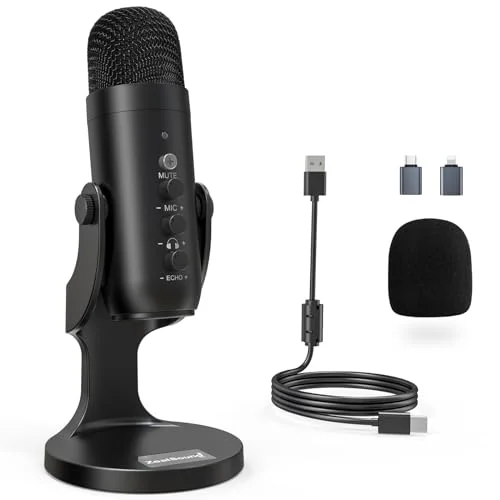
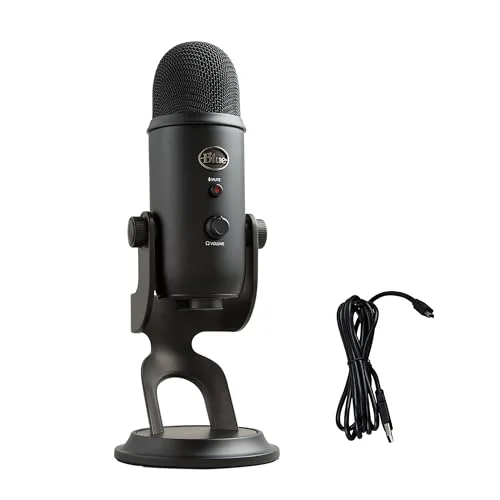
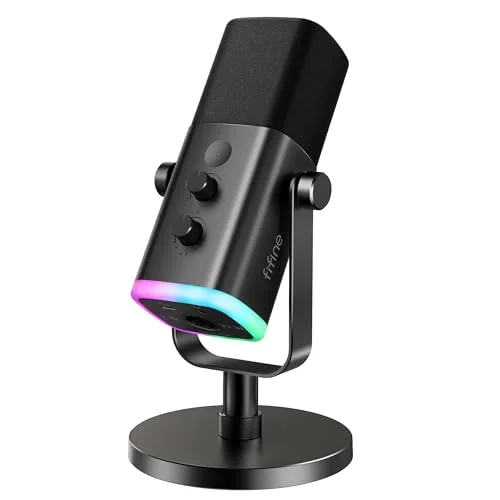
Use external mics if you care about vocal quality. A separate USB or XLR mic will outperform headset mics and keeps you free to choose the audio reproduction channel purely for listening.
Common mistakes that ruin footstep audio
Using heavy bass presets during competitive play washes out mid/high transients. That bass-first tuning can feel immersive but undermines positional cues that matter for footsteps.
Assuming virtual surround always helps. Virtualization algorithms differ by manufacturer and game engine; enable them only if they demonstrably improve the cues in the specific game you play.
Not testing in the same environment as your matches. Acoustic rooms, monitor placement, and background noise change what you hear dramatically. Test audio in your actual play environment rather than in a quiet office or showroom.
Relying on stock ear tips for sealed earbuds. Many people never try foam tips and struggle with poor isolation as a result. Invest in a good set of tips to get the expected performance.
Skipping a microphone solution when using earbuds. Players who choose earbuds but rely on in-game comms must plan for a separate mic or a headset mic adapter. Communication clarity affects team outcomes as much as audio localization.
setups that work
Example 1 – Competitive PC player seeking razor-sharp cues: Wired sealed earbuds with foam tips connected to the motherboard’s front audio or a DAC/AMP, plus a desktop USB condenser mic. Use in-game stereo output with minimal DSP and a slight mid/high boost.
Example 2 – Console casual player who values comfort and chat: Closed-back gaming headset with integrated mic and controller passthrough. Keep virtual surround enabled for immersion; reduce overall bass if footsteps feel buried.
Example 3 – Streamer who needs both quality mic and positional audio: Over-ear studio headphones or a high-end gaming headset for monitoring, combined with a professional USB/XLR mic. Use game audio monitoring through the headphones with a neutral EQ for accurate mixing.
How much will you notice the difference in real matches?
New players will notice a clear difference in the first session: footsteps that were previously hard to pick out will become more audible with sealed earbuds. For experienced players, the difference is more nuanced and depends on the game’s audio engine and match conditions. The best way to know is a simple A/B test: play a round with your current setup, switch to the alternative, and repeat the same map positions or warm-up drills.
Players who already prioritize microphone quality and comfort may find the marginal gain in footstep detection from switching to earbuds is not worth the trade-off. Players who depend on pinpoint localization for peeking and counter-peeking will find earbuds more beneficial.
Price and practicality trade-offs
A decent pair of wired earbuds that seal well can be inexpensive, but the best models often cost more than mid-range gaming headsets. Gaming headsets add features such as surround DSP, detachable mics, and plush padding that increase convenience but also add weight and sometimes latency.
Wired earbuds are small and portable but can be fragile; cable resiliency and connector quality matter. Gaming headsets are bulkier but often more durable. Method of connection is a major trade-off: 3.5mm wired connections maintain low latency across devices, while USB headsets offer feature integration at the cost of device flexibility.
Maintenance and hygiene differ as well. Earbuds require cleaning of tips and attention to earwax, while headsets can accumulate sweat and need padding care. Consider long-term replacement costs for foam tips and earpads when you calculate total cost of ownership.
FAQ
Will earbuds damage my hearing faster than headsets?
A safe listening level depends on volume and duration, not the transducer type. Keep volume at moderate levels and take breaks. Earbuds that seal strongly can tempt listeners to lower system volume because isolation improves perceived loudness, which can indirectly protect hearing.
Do virtual surround modes help locate footsteps?
Virtual surround helps widen perceived space and can improve front/back discrimination in some titles. Turn it off for competitive play if it blurs lateral detail. Test both modes on maps you know well to judge the effect yourself.
Are wireless gaming headsets worse for footsteps than wired?
Wireless solutions typically introduce slightly higher latency and potential compression compared with wired connections. High-end wireless designs minimize these effects, but wired connections are still safest for the minimal-latency requirement of competitive play.
Can EQ completely fix a bad headset for footsteps?
EQ can help by boosting the mid/high range and reducing masking bass, but it cannot overcome poor imaging or hardware limitations in driver dispersion. A headset with fundamentally blurred imaging will only improve so much via EQ.
Should I use a separate mic if I switch to earbuds?
Yes, if team communication matters. A small headset boom mic on a desktop or a USB/XLR mic provides superior clarity to most earbud inline mics and preserves your choice of listening transducer purely for monitoring.
Verdict and next
Pick wired earbuds if you want the most direct, high-frequency clarity and low-latency cues for footsteps; pick a gaming headset if you need comfort, integrated mic convenience, and fuller immersive sound. Test any candidate in the exact games you play and try brief A/B listening between neutral and boosted mid/high EQ. If you switch to earbuds, buy a set of foam tips and a compact desktop mic; if you stick with a headset, choose a model with either a neutral tuning or EQ presets that allow you to reduce bass masking.

Leave a Reply