
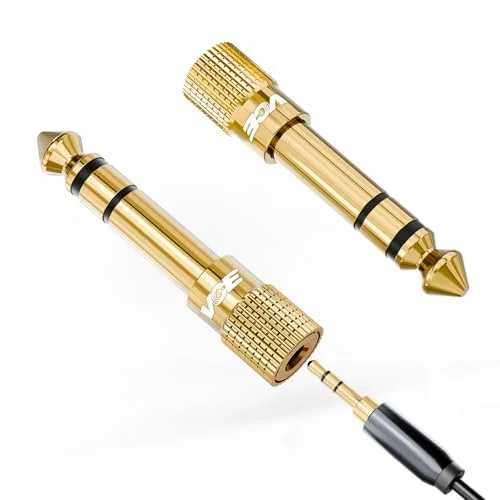
Plugging headphones straight into a guitar’s output jack rarely works the way you’d hope. Electric guitars push out a weak, high-impedance instrument signal, not the amplified power headphones need to actually produce sound. If you try it, you’ll likely hear silence or just a faint whisper.
The real challenge is figuring out how to listen privately without waking up the house. The solution isn’t just about plugging things in; it’s about bridging the gap between your guitar’s quiet output and your headphones using the right adapter or interface.
Why Guitar Output Won’t Drive Headphones
The main hurdle here is a mismatch in signal levels. Your guitar sends out a tiny electrical pulse, while headphones expect a powered, stronger source. This section breaks down why a direct connection usually falls flat.
An electric guitar’s output jack typically sends an instrument-level signal around 100 millivolts. That’s simply too weak to move headphone drivers effectively. Headphones are built for line-level or amplified signals. When you plug them in directly, you usually get faint, distorted audio at best.
Some ultra-sensitive headphones might pick up a ghost of a sound, but most will stay silent. Without amplification, the guitar just doesn’t have the muscle to push sound through.
Guitar outputs weak signal into headphone jack wiring.
Headphones receive insufficient power to drive drivers.
Result: faint, distorted, or no audio through headphones.
You need amplification or a dedicated interface to bridge the gap.
Adapters To Bridge Guitar And Headphones
Since a guitar can’t drive headphones on its own, you need a way to bridge that gap. Whether it’s a simple physical adapter for use with an amp’s headphone out or a small preamp, these picks address the core issue of connecting your guitar’s weak output to standard 3.5mm headphones.
|
1
|
VCE 3.5mm to 1/4 Adapter Stereo Headphone Adapter, 24K Gold-Plated, 2-Pack | Seamless Audi |
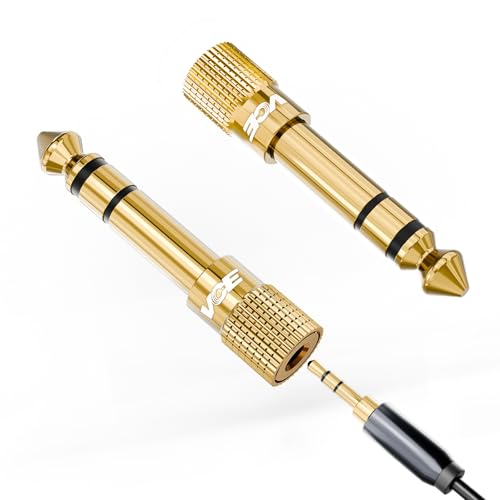
Converts a guitar’s 1/4-inch output to a 3.5mm headphone jack using a gold-plated TRS connection.
This VCE adapter bridges the gap between your guitar’s output port and standard headphones. The 24K gold-plated TRS connector helps keep signal loss low and resists corrosion over time. It’s built from brass, so it can handle being plugged and unplugged frequently.
You get two adapters in the pack, which is handy if you misplace one during a practice session.
The knurled 360-degree grip makes it easier to plug and unplug, even in tight spaces behind an amp. Keep in mind, though, that this adapter only changes the physical connection. It doesn’t amplify the signal. You’ll still need high-sensitivity headphones or a preamp to get usable volume from your guitar.
|
2
|
Nicholaus 3-Pack 6.35mm Male to 3.5mm Female (1/4 in to 1/8 in) Stereo Headphone Adapter, |

Upgraded gold-plated adapter with a snug fit for secure guitar-to-headphone connections.
Nicholaus includes three adapters in this pack, giving you plenty of spares for connecting guitar gear to consumer headphones. The thickened gold plating aims to improve conductivity and cut down on noise during transfer. The snug TRS fit helps prevent the crackling you often get with cheaper, loose adapters.
Each one cleanly bridges 6. 35mm pro audio gear to 3. 5mm headphones.
The wear-resistant, anti-slip design stays put during gigs and practice. One thing to note: it explicitly warns against using TRRS headphones. If you’re using modern smartphone-style headphones with inline controls, you’ll only get sound in one ear. Stick to standard stereo headphones for full audio.
|
3
|
Chadou Audio Adapter 6.35mm (1/4 inch) Male to 3.5mm (1/8 inch) Female Stereo Headphone Co |
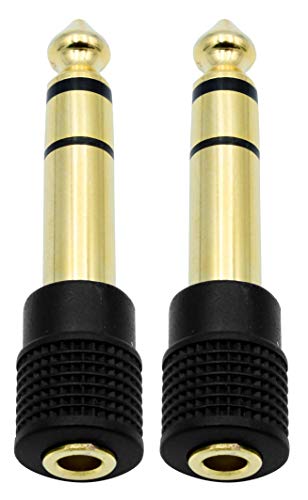
Pure copper adapter with 360-degree grip treads for reliable guitar and headphone connections.
Chadou’s two-pack uses pure copper conductors to help keep the signal clean between your guitar and headphones. The 360-degree grip treads give you some traction when plugging into tight amplifier jacks. Unlike plastic alternatives, the metal construction holds up better to the wear and tear of regular gigging.
This adapter works well with guitars, keyboards, and bass amps. It’s a solid option for basic practice setups. But like other passive adapters, it won’t boost your guitar’s weak output. You might need to turn your amplifier up higher to get reasonable volume through your headphones.
|
4
|
NANYI 1/4 to 3.5mm Headphone Adapter, 6.35mm Male to 3.5mm Female, 1-Pack | 1/8″ Female to |
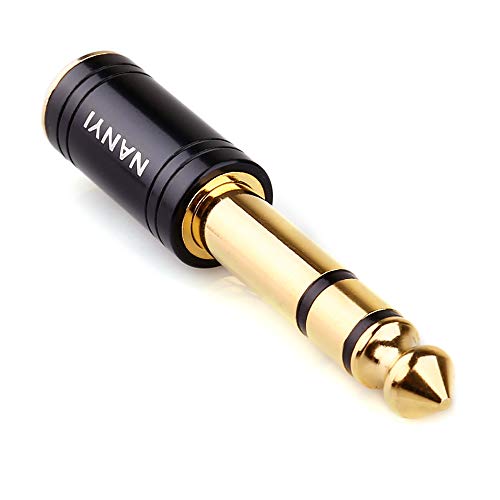
Brass and copper adapter with a tight fit eliminates rattling and crackling during guitar-to-headphone conversion.
NANYI’s single adapter feels heavy-duty, with a brass housing and copper contacts. The solid metal construction helps prevent the looseness and signal dropouts common in cheap plastic adapters. It has a dense, weighty feel that stays connected without wiggling, even in tight rack situations.
The TRS stereo configuration passes left and right channels cleanly without needing internal circuitry or batteries. It’s pocket-sized and perfect for tossing in a gig bag. The downside is that it’s a single pack, so if you lose it mid-gig, you’re relying on backup gear or venue equipment.
|
5
|
SOLMIMI 1/4 to 1/8 Headphone Adapter, 4 Feet 6.35mm Male to 3.5mm Female TRS Stereo Audio |
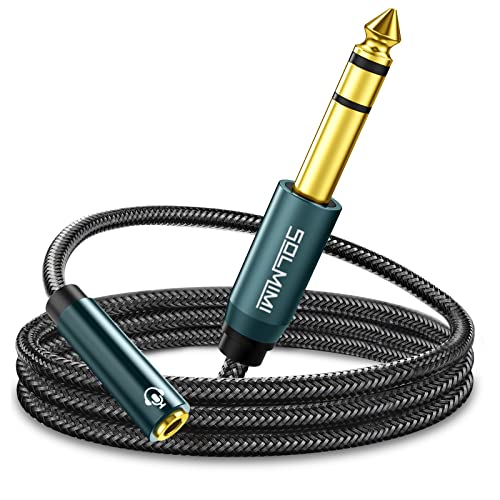
4-foot extension cable with gold-plated TRS connector for flexible guitar-to-headphone setups.
SOLMIMI offers a four-foot cable solution rather than just a simple adapter. The oxygen-free copper core helps minimize noise, while the 24K gold-plated connector resists corrosion. This gives you some freedom to move around during practice or recording. The nylon braid covering helps prevent tangling and adds durability.
The step-down design accommodates phones with cases that might block standard plugs. You’ll appreciate the extra length when moving around your studio setup. However, a longer cable means more chances for it to catch on equipment or trip you up during active playing sessions.
|
6
|
Amazon Basics Gold-Plated 6.35mm 1/4 Male to 3.5mm 1/8 Female Stereo Jack Adapter for Head |
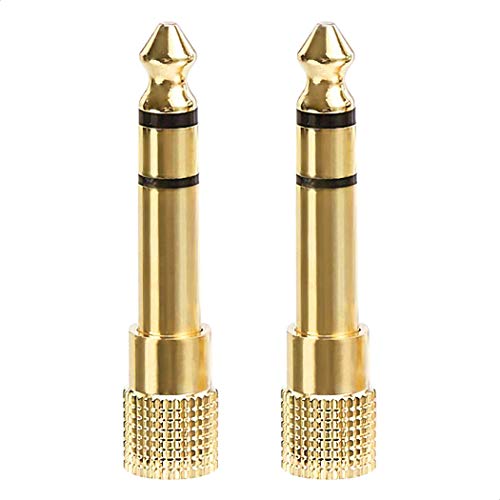
Gold-plated adapter with flexible PVC jacket ensures consistent guitar-to-headphone audio connection.
Amazon Basics brings proven reliability with this two-pack design. The gold-plated connectors resist corrosion from sweat and humidity during long practice sessions. The 360-degree grip tread makes plugging easy, even in darkened stage environments. The protective metal housing helps shield against physical damage.
The flexible PVC jacket handles being stepped on and coiled repeatedly. It works with standard headphones and most guitar amps with 1/4-inch jacks. The design is basic, prioritizing function over flash for everyday use.
|
7
|
Zylveron 6.35mm(1/4 Inch) Male to 3.5mm(1/8 Inch) Female Headphone Adapter | 24K Gold-Plat |

Solid brass adapter with secure-fit design maintains stable guitar-to-headphone connections during movement.
Zylveron’s precision-engineered brass adapter delivers a snug connection that doesn’t pop loose during gigs. The gold-plated contacts help ensure long-lasting signal transmission without static or popping sounds. The compact design fits easily in guitar bags and pockets between shows.
Built for electric pianos, drums, and guitar amps, it handles the demands of professional gear. The metal housing outlasts plastic competitors significantly. However, the tight fit may make it difficult to unplug in emergency situations when you need quick access.
|
8
|
QAJOPFN 4 Pack Headphone Jack Adapter – 3.5mm (1/8 inch) Male to 6.35mm (1/4 inch) Female |

Four-pack bidirectional adapters cover both guitar and headphone connection directions with gold-plated durability.
QAJOPFN’s four-adapter set covers both connection directions you might need. Two adapters convert 1/4-inch to 3.5mm, and two do the reverse. The gold-plated treatment resists corrosion from stage environments. The 360-degree plugging slots make connection easy regardless of orientation.
This versatility suits recording studios and live venues juggling different equipment standards. The metal construction handles frequent swapping between instruments and headphones. An 18-month warranty backs up the durability claims for serious musicians.
|
9
|
IIISOGNO 3.5mm to 1/4″ TRS Adapter Set, Audio Converter for Electric Guitar/Keyboard/Mixer |

TRS adapter set with gold-plated connectors provides balanced stereo conversion for guitar and consumer devices.
IIISOGNO’s adapter set includes both male-to-female and female-to-male configurations for comprehensive connectivity. The TRS design ensures superior stereo audio with minimal signal loss. Gold-plated contacts maintain clean transmission across guitar instruments, keyboards, and mixers.
The transparent storage box keeps adapters organized and prevents loss during travel between venues. The compact design suits home, gig, and studio use equally well. Some users report the plastic storage box feels less premium than expected.
|
10
|
MOBOREST 3.5mm to 1/4 (6.35mm) Stereo Pure Copper Headphone Adapter, 2PCS | 1/8 Male to 1/ |

Bidirectional copper adapter pair enables full conversion between guitar and consumer headphone audio standards.
MOBOREST’s bidirectional set includes both 3.5mm male-to-1/4-inch female and reverse adapters. High-purity copper cores deliver lossless stereo signals between guitars, mixers, and headphones. The one-piece solid brass shells survive frequent plugging and unplugging during active sessions.
The 360-degree non-slip texture provides grip in cramped equipment racks and low-light conditions. Both adapters use TRS dual-channel design for balanced audio without mono issues. Unlike single-direction adapters, this set future-proofs your connection needs.
These adapters solve the physical connection side of guitar-to-headphone use. But remember, none of them amplify the weak guitar signal. For louder, clearer private listening, pair them with high-sensitivity headphones or add a small headphone amplifier.
When You Need Signal Amplification
Passive adapters change the connection but not the power. This section covers when you need active amplification to actually hear your guitar through headphones.
| Setup Type | Adapter Needed | Amplification Needed |
|---|---|---|
| Practice at home | Basic TRS adapter | Optional |
| Live gig monitoring | Secure-fit brass | Often needed |
| Recording studio | Bidirectional pair | Sometimes |
| Low-output vintage guitar | High-quality adapter | Essential |
Signal amplification becomes necessary when your guitar’s output stays too quiet even with maximum amplifier volume. High-impedance headphones often struggle more than low-impedance ones. Consider a dedicated headphone amplifier or guitar interface with a built-in headphone output.
These devices boost the signal appropriately and protect your hearing from unexpectedly loud volume spikes during tuning.
Choosing Headphones For Guitar Output
Not all headphones work equally well with guitar signals. This section explains what to look for in headphones when connecting to instruments through adapters.
- Choose high-sensitivity headphones rated above 100dB for guitar use.
- Avoid noise-canceling headphones that filter out guitar harmonics.
- Open-back designs leak sound but offer more natural guitar tone.
- Closed-back headphones isolate better for quiet practice sessions.
- Test fit and cable length before committing to long practices.
Impedance Matching Tips
Match your headphone impedance to your guitar’s output capability. Low-impedance headphones (16-32 ohms) work best with passive adapters. High-impedance models (250+ ohms) often need active amplification. If your headphones sound weak or thin, impedance mismatch is likely the culprit rather than adapter quality.
Cable and Connector Durability
Instrument use subjects cables to more stress than casual listening. Look for reinforced connectors and braided cable jackets. Short cables prevent tangling during active playing. Detachable cables let you replace just the wire when it inevitably gets yanked or stepped on during energetic performances or practice sessions.
Yes, you can use headphones with your guitar, but not by plugging them directly into the instrument. You need a 1/4-inch to 3. 5mm adapter plus high-sensitivity headphones for usable volume. For louder, clearer results, add a headphone amplifier between your guitar and headphones.
Start with any adapter from the picks above, test with your existing headphones, and upgrade only if the signal stays too weak.

Leave a Reply