
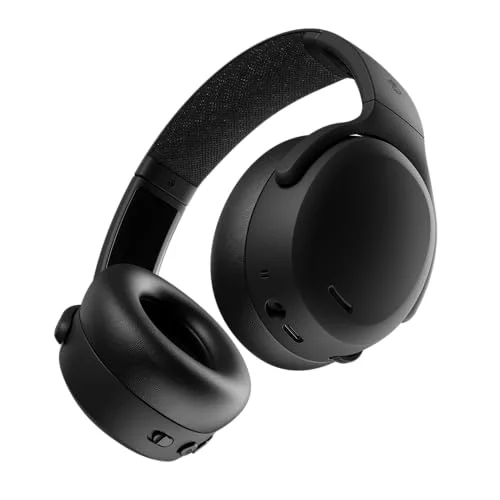
Bass is what makes a track feel physical instead of thin. The best headphones for bass don’t just boost a slider; they move air, hold the low end without turning muddy, and stay comfortable when you crank the volume.
Some listeners want a rumble they can actually feel in the cups. Others want tight kick drums that stay clean next to vocals. I’ll explain what actually creates strong bass, then line up ten over-ear options that answer that question in different ways.
Why Headphone Bass Falls Flat
Low notes need air movement and a good seal around the ear. Small drivers struggle to push that air without distortion. Over-ear cups help because they trap bass energy instead of leaking it. EQ can add boom, but it cannot invent clean low end the hardware cannot produce.
Knowing that difference keeps you from buying headphones that only sound loud. The goal is weight you can feel without losing the rest of the mix.
Bass in headphones is a physical job, not just a frequency number. A driver must move far enough to create pressure inside the cup. If the seal breaks, that pressure escapes and the low end collapses. Hair, glasses, and a loose band all do this.
Closed over-ear designs hold the pressure better than open or on-ear styles. A second issue is control. Extra bass without damping turns kick drums into a blur. Vocals sit on top of that blur and lose clarity.
Some headphones add a dedicated bass driver or a haptic system so you feel the hit as vibration. That is different from simply raising the bass slider. Vibration can thrill hip-hop and EDM. It can also mask detail in jazz or acoustic tracks.
Battery, noise canceling, and comfort matter too, because bass listening often lasts hours. A pair that hurts after thirty minutes will not stay your bass headphone.
What Actually Builds Headphone Bass
| Piece | Role In Bass | Weak Sign |
|---|---|---|
| Driver size | Moves air for low notes | Thin kick, early distortion |
| Ear seal | Holds pressure in the cup | Bass drops when you move |
| Extra bass driver | Adds felt low-end energy | Only a louder mid-bass hum |
| EQ or button | Shapes an existing signal | Boom with no real weight |
| Noise canceling | Lets you hear bass quieter | You crank volume to feel it |
How To Judge Bass Before You Buy
A spec sheet rarely says how bass will feel on your head. Driver size hints at potential, but seal, tuning, and extra bass hardware matter more. Use a short checklist before you compare models. The same track should reveal boom, tightness, and whether voices survive the low end.
Ten minutes of honest listening beats a marketing line about massive bass.
Play a familiar hip-hop track at moderate volume and note whether the kick hits or just gets louder.
Switch to a bass-heavy electronic song and listen for rattle, buzz, or a woolly smear over the snare.
Add a vocal-forward pop song and check that words stay clear when the chorus bass arrives.
Walk or turn your head to see if the low end drops the moment the ear seal breaks.
If the pair has a bass slider or EQ, test the lowest and middle settings before you judge it.
- Reject constant boom that covers every instrument, because that is loudness, not controlled bass.
- Skip a loose fit if glasses or hair lift the pad, since leaked bass cannot be EQ’d back.
- Avoid max bass as your only test, because distortion hides until you lower the volume.
- Do not trust battery claims alone if the cups hurt, since you will stop wearing them.
- Watch for bass that vanishes on acoustic tracks, which can mean the tuning is one-note.
- Prefer a seal you can wear an hour before you chase the biggest driver number.
Headphones That Hit Harder Bass
The ten headphones below answer the bass question in two camps. Crusher models add a physical hit you can dial. Sony, JBL, soundcore, and Bose shape bass with drivers, buttons, or EQ. Several add noise canceling so you can play at a lower volume. None is a neutral studio monitor.
Read each one for felt bass, battery, and how much control you actually get.
|
1
|
Skullcandy Crusher ANC 2 Noise Cancelling Wireless Headphones – True Black | Multi-Sensory |
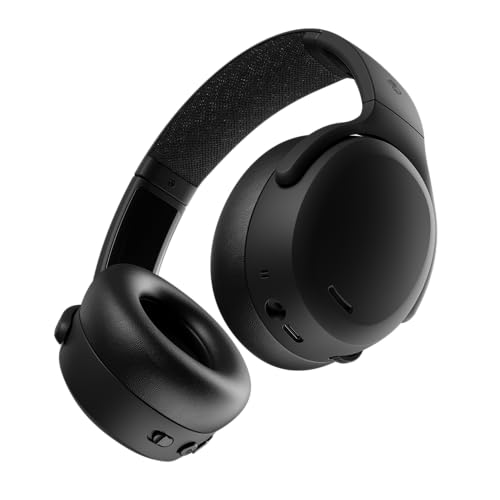
Dual bass drivers plus a Crusher slider let you feel the low end, not only hear it.
The Crusher ANC 2 is built around patented multi-sensory bass. Two 40mm drivers handle the full range, while extra dual bass drivers add a physical hit you can dial. Adjustable four-mic noise canceling keeps that bass from fighting train or gym noise.
Battery reaches about 60 hours with ANC off, and ten minutes of charge adds roughly four hours. The Skullcandy app offers Personal Sound by Mimi and an EQ, plus multipoint pairing to hold two devices at once.
I would reach for this when hip-hop, EDM, or movie effects should land in the cups. Gym sessions and travel fit the over-ear seal and long battery. Stay-Aware mode helps when you still need street noise. The honest limit is taste.
Crusher bass is a sensation, not a neutral studio curve. Turn the slider high and mids can feel pushed back. If you want subtle bass, this pair may feel too intense.
|
2
|
Skullcandy Crusher Evo Wireless Multi-Sensory Bass Headphones – True Black | Bluetooth, No |
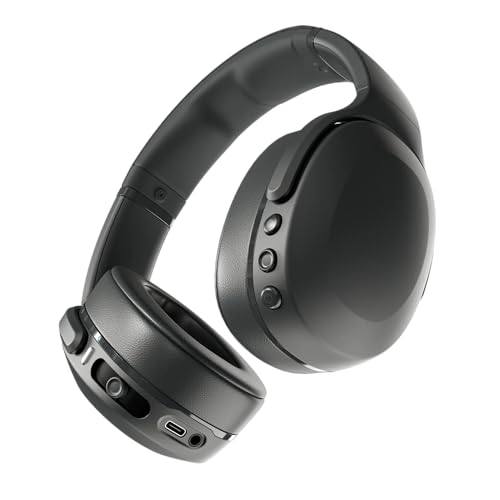
Same Crusher drivers as the ANC model, with a lighter feature set and 40-hour battery.
The Crusher Evo keeps the multi-sensory formula alive. Two 40mm drivers plus dual bass drivers create a hit you feel. Battery runs up to 40 hours, and a 10-minute charge still yields about four hours. Noise isolation comes from the over-ear fit, not active canceling.
The app runs a hearing check and tunes levels to your ears. Buttons handle calls, volume, and tracks, and it folds flat for a bag.
This fits listeners who want Crusher bass without paying for ANC. Commutes, study sessions, and gym playlists all work if the room is not extremely loud. The collapsible frame travels easier than a rigid studio can. Call controls are basic but present. The limit is quieting.
Passive isolation will not hush a plane the way the ANC 2 or the 1080 can. Bass impact stays strong, but background noise may still sit under it.
|
3
|
Skullcandy Crusher Wireless Multi-Sensory Bass Bluetooth Headphones – Black | Patented Cru |
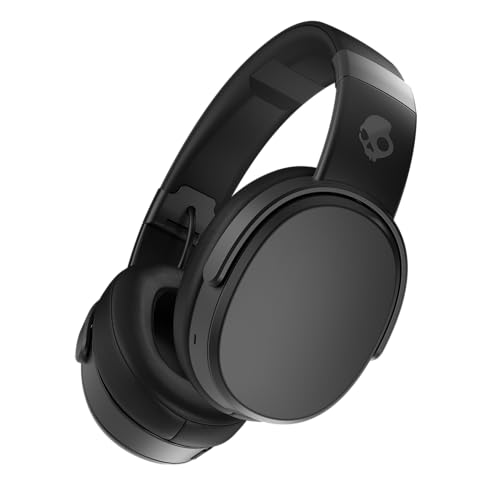
Fifty-hour battery and dual bass drivers give long sessions of physical low end.
This Crusher Wireless model is the straightforward bass tool in the line. Patented Crusher tech pairs two 40mm drivers with extra bass drivers to give you a rumble you can feel, aimed at music and movies.
Battery is listed up to 50 hours, with the same 10-minute rapid charge for about four hours. Button controls cover calls, tracks, and volume. The frame folds flat, and a one-year USA limited warranty is included.
Pick this when playtime matters more than app tuning or noise canceling. Long study days and travel days fit a 50-hour claim. The over-ear seal isolates some room noise on its own. There is a mic for phone calls. The limit is refinement.
Feature lists here skip the hearing-profile app and active canceling found on newer Crushers. Bass should still hit hard; you just get fewer ways to shape it.
|
4
|
Sony ULT WEAR Over-Ear Noise Canceling Wireless Headphones, Black | Massive Bass, Comforta |

An ULT button adds a one-press bass boost on top of Sony noise canceling.
Sony ULT WEAR targets people who want a bass boost they can switch on instantly. Press the ULT button and the low end jumps without opening an app. Dual noise canceling with a V1 processor follows the 1000X approach. Cushions use a thermo-foaming shape that molds to the ear.
Battery is about 30 hours, and three minutes of charge can add about 90 minutes of music. Cups swivel and fold into a compact case for travel.
Travel is the clearest use case here. The case and fold design suit a bag, and noise canceling helps on planes. ULT mode fits hip-hop, pop, and action movies. Thermo-foam cushions should stay comfortable longer than stiff pads.
The limit is runtime next to Crusher models that claim 50 to 65 hours. Thirty hours is still a full day for many people, but leave ULT on all the time and the bass can feel thick on acoustic songs.
|
5
|
soundcore by Anker Q20i Hybrid Active Noise Cancelling Headphones, Black | Over-Ear, Bluet |

BassUp on 40mm drivers plus 22 EQ presets shape thump without a haptic motor.
The soundcore Q20i by Anker is a practical bass headphone with hybrid noise canceling. Two inner and two outer mics are claimed to cut up to 90 percent of outside noise. Oversized 40mm drivers and BassUp technology push thumping beats for commute and gaming.
Hi-Res audio is available through the AUX cable. Battery hits 40 hours with ANC on and 60 hours in normal mode. Five minutes of charge adds about four hours, and Bluetooth 5. 0 connects two devices.
The app is the reason to consider this pair for bass control. Twenty-two presets and a manual EQ let you raise low end without buying a second headphone. ANC, normal, and transparency modes cover office, home, and street. White noise is there if you want calm between tracks.
The limit is physical impact. BassUp is electronic emphasis, not the vibrating Crusher system. If you need jaw-level vibration, this stays strong but conventional.
|
6
|
Skullcandy Crusher 720 Wireless Sensory Bass Headphones – True Black | Next Gen Crusher Ev |

The Crusher wheel and 65-hour battery make this the longest intense-bass session pick.
Crusher 720 is the next step after Crusher Evo. Skullcandy calls the bass deeper, smoother, and more precise, with a wheel to set intensity. THX Spatial Audio adds a wider, three-dimensional field around that low end.
Battery reaches up to 65 hours, and ten minutes of charge still gives about four hours. The design is about 23 grams lighter than a leading competitor, which matters for gym wear. A mic handles calls.
Choose the 720 when you want the strongest adjustable Crusher hit and spatial sound together. Fitness and long music days match the lighter build and 65-hour claim. The wheel lets you lock a bass level without digging through menus. Spatial audio can make movie mixes feel larger.
The limit is focus. Intense bass plus a wide soundstage can soften fine detail in quiet recordings, so dial the wheel down for podcasts and acoustic sets.
|
7
|
JBL Tune 720BT – Wireless Over-Ear Headphones with JBL Pure Bass Sound, Bluetooth 5.3, Up |

JBL Pure Bass and a 76-hour battery favor long, punchy listening over haptics.
JBL Tune 720BT uses Pure Bass tuning, the low-end idea behind many JBL venues. Bluetooth 5. 3 streams from a phone without a cable. The app offers preset EQ modes and a curve you can edit. Battery is the standout here, up to 76 hours, plus speed charge.
The build is lightweight and folds for a bag. Ear-cup buttons manage sound and calls with Voice Aware, and hands-free calls stay usable because you can hear your own voice.
This is the endurance pick for bass that is punchy rather than vibrating. Daily playlists, workouts, and long flights fit a battery that outlasts most rivals here. Folding helps if you pack light. EQ in the app is enough to push kick drums without a hardware bass button.
The limit is isolation and canceling. Nothing in the feature list claims active noise canceling, so loud rooms will leak in, and the bass may have to fight that noise.
|
8
|
Bose QuietComfort Headphones – Wireless Bluetooth Headphones, Active Over Ear Noise Cancel |

Adjustable EQ puts bass, mids, and treble under your control inside strong noise canceling.
Bose QuietComfort in Twilight Blue is a limited color of the familiar over-ear design. Noise canceling mixes active and passive blocking so bass is easier to hear at moderate volume. Plush cushions and a padded band target long sessions. Quiet and Aware modes switch between full canceling and open awareness.
High-fidelity playback includes an adjustable EQ for bass, mids, and treble. Battery is up to 24 hours. The color is the main difference from the green pair below.
Buy the blue pair if you want controlled deep bass rather than a vibrating cup. The EQ can lift low end for hip-hop, then pull it back for podcasts. Aware mode helps walking outside without removing the headphones. Comfort is the other reason people keep Bose on for hours.
The limit is stamina and sensation. Twenty-four hours trails several options here, and you will not get Crusher-style chest-in-the-cup rumble. Bass stays musical and adjustable instead.
|
9
|
Bose QuietComfort Bluetooth Headphones, Wireless Headphones with Active Over Ear Noise Can |

Same deep-bass EQ and Quiet mode as the blue pair, in Cypress Green.
The Cypress Green QuietComfort is the same wireless platform in another limited color. Active over-ear noise canceling plus passive sealing lets low notes come through without cranking volume. Plush earcups and a padded band hold position on long listens. Quiet and Aware modes are the two listening choices.
Adjustable EQ still covers bass, mid-range, and treble. Playtime is up to 24 hours, and a 15-minute charge adds up to 2. 5 hours. That short charge is the detail missing from the blue listing.
Choose green when the color is the one you will actually wear, because the bass tools match the blue model. Deep bass through EQ suits pop, electronic, and film scores once noise is pushed down. Aware mode is useful in an office when someone might speak.
Calls use the built-in mic. The limit is duplication. If you do not care about Cypress Green, you are buying the same bass experience twice. Neither color adds a physical bass driver.
|
10
|
Skullcandy Crusher 1080 ANC Headphones with Sound by Bose – True Black | Refined Crusher B |

Bose noise canceling wrapped around adjustable Crusher profiles for bass you can feel.
Crusher 1080 ANC pairs Skullcandy’s sensory bass with licensed Bose audio tools. QuietControl ANC uses six microphones and adaptive processing. Stay-Aware mode lets outside sound back in. TrueSpatial aims for a speaker-like stage, and head tracking keeps that image stable as you turn.
The Crusher wheel or the app sets bass intensity. Three Crusher Profiles change how the bass feels, not only how loud it is. Personal Sound and EQ modes live in the app, along with firmware updates.
This is the pick when you want felt bass and serious noise canceling in one headset. Travel and open offices suit six-mic adaptive ANC better than passive Crushers. Spatial audio with head tracking can make bass feel placed in a room, not stuck in one ear. The limit is complexity.
Three profiles, a wheel, and an app mean more setup than a single ULT button. If you never tweak, you may not use what you paid for.
Felt bass lives mainly in the Crusher line, with the 720 and 1080 offering the most control. Sony’s ULT button and soundcore’s BassUp are simpler boosts with real noise canceling. JBL wins on hours. Bose wins on comfort and a cleaner EQ.
If you want rumble you can feel, start with a Crusher. If you want deep bass that stays musical, start with Bose or Sony.
Dialing Bass In After You Choose
Buying the headphone is only half of getting better bass. Slider position, seal, and source quality change the result the same day. A Crusher wheel and a Bose EQ are different tools, but both can be set too hot. Spend one session finding a level that still leaves vocals intact.
Then save that setting so every playlist does not start overblown.
Start with the bass control near the middle, not at maximum. Maximum is a demo setting. It feels exciting for one song and tiring for an album. On Crusher models, the wheel adds vibration as well as level, so small turns matter.
On Sony ULT WEAR, the ULT button is a switch, not a fade. Compare it on and off with the same track. Bose and JBL put the shape in an app EQ. Raise the low shelf a little, then stop when kick drums bloom into the vocal.
soundcore’s BassUp and presets work the same way. Keep volume moderate while you tune. Loud playback masks distortion and makes every headphone seem bassy. Check the seal each time you sit down. Glasses arms and a high ponytail are common leaks.
If the low end suddenly thins, fix the pad before you add more EQ. Save a second preset for podcasts so spoken voices are not trapped under a sub bump.
Play one bass-heavy song you know well, at a volume you could hold for twenty minutes.
Set the bass slider, ULT mode, or EQ to the middle before you judge the headphone.
Raise bass until the kick feels solid, then back off one step if vocals turn dull.
Re-seat both cups and repeat the last chorus to confirm the seal, not the EQ, changed the sound.
Save that preset in the app, and make a flatter one for calls and spoken audio.
Keeping Bass Strong Over Months
Bass headphones lose impact for boring reasons. Pads flatten, charge habits slip, and a dirty EQ preset stays on. None of that means the drivers died. A short maintenance habit protects the low end you bought them for.
Watch comfort too, because a pair you stop wearing has no bass at all.
- Wipe ear pads weekly so skin oil does not harden the foam and break the bass seal.
- Store cups so the band is not crushed, and use the case when you travel.
- Charge before the battery hits empty, since weak power can make drivers sound strained.
- Update app firmware on Skullcandy, JBL, soundcore, and Bose so EQ and ANC stay stable.
- Replace pads when they stay dented, because a flat pad leaks the pressure bass needs.
- Reset EQ after a firmware update and recheck your saved bass preset.
Comfort and seal decide whether bass still sounds right after the first month. Plush Bose cushions and thermo-foam Sony pads can compress. When they do, the cup sits farther from the ear and low notes thin out.
Crusher models depend on that seal even more, because the sensory hit needs a closed chamber. If one side feels weaker, check the pad and the headband click before you blame a driver. Battery claims assume mixed use.
ANC on the ANC 2, Q20i, ULT WEAR, and 1080 will drain faster than the sticker that quotes ANC off. Rapid charge helps, but it is not a substitute for a full cycle before a flight. Heat and sweat from gym sessions age foam faster than desk use.
Let the cups dry before they go in a sealed case. If bass turns buzzy at normal volume, lower the Crusher wheel or ULT mode first. Distortion at modest level is a sign to ease the boost, not to push harder.
The best headphones for bass keep the low end strong without burying the song. They also match whether you want vibration or just a deeper tone. Start today with one bass-heavy track you already know. Play it on whatever you own, at a moderate volume.
Notice if the kick is muddy or simply too quiet. That tells you if you need a Crusher-style hit. It also tells you if an EQ pair like Bose, Sony, or soundcore is enough. Then test the seal. Press the cups gently and see if the bass jumps.
If it does, fit matters as much as the next model you buy.

Leave a Reply