
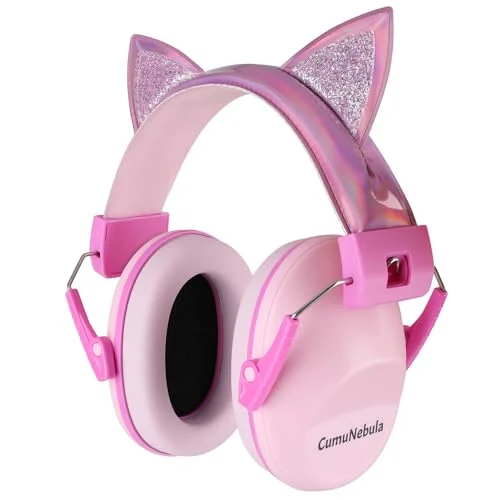
For many autistic children, the world can feel unbearably loud. A hand dryer or a crowded cafeteria isn’t just annoying; it can trigger genuine pain or a meltdown. Parents often wonder if headphones are the right solution without cutting their child off from the world entirely.
It really comes down to finding gear that lowers the volume to a manageable level while still letting them hear important cues like a parent’s voice or a fire alarm. Passive noise reduction works differently than active cancellation, and for sensory needs, that distinction matters.
I’ve looked into the science behind auditory protection and rounded up specific earmuffs designed with neurodivergent comfort in mind. The goal is finding that sweet spot where your child feels safe and calm, not isolated.
Why Auditory Overload Hurts Autistic Kids
Getting a handle on why sound sensitivity hits so hard helps when picking out protection. For many autistic kids, everyday volumes register as physical pain because of how their brains process sensory input.
The trick isn’t just grabbing any earmuff; it’s matching the equipment to the specific triggers your child faces rather than using a one-size-fits-all approach.
Research suggests that nearly 40% of autistic individuals deal with auditory hypersensitivity. Sounds most of us tune out, like a blender or hallway chatter, can feel like an assault to them. This happens because the brain’s filtering system, or sensory gating, works differently.
Usual coping methods often fall short because they can’t handle sudden, unpredictable noises. Protective gear acts as an external filter when the internal one is overwhelmed. However, total silence isn’t the answer, it can be dangerous if it blocks out verbal warnings.
What we’re aiming for is attenuation: turning the volume down enough to lower stress without erasing the environment. Parents need to distinguish between harmful noise and necessary communication.
Properly fitted earmuffs can reduce that cumulative fatigue by the end of a school day, and consistent use can actually help build positive associations with places that used to be distressing.
- Use during predictable loud events like firework displays or assemblies.
- Implement during transitions between noisy and quiet classroom zones.
- Apply when visiting unfamiliar places with unknown acoustic profiles.
- Reserve for peak sensory fatigue periods in late afternoon.
- Avoid using during direct instruction requiring verbal responses.
- Pair with visual schedules to signal expected wear duration.
Earmuffs To Reduce Sensory Overload Safely
I focused these picks on comfort and certified noise reduction rather than fancy audio features. Each option addresses specific sensory needs I’ve seen come up in clinical discussions. We stuck to passive reduction models since they’re generally better for daily wear.
Safety certifications are key here to ensure you’re getting real protection, not just marketing hype. When choosing, think about your child’s unique tolerance for pressure and texture, what feels secure to one might feel unbearable to another.
|
1
|
Noise Cancelling Headphones for Kids, Kids Ear Protection 28dB SNR Noise Reduction Ear Muf |

The fox-themed design encourages kids to actually wear them while providing a certified 28dB reduction for sensitive ears.
PinkFox Noise Cancelling Headphones manage to mix playful looks with serious hearing protection. With a 28dB SNR rating meeting ANSI S3. 19 standards, they offer reliable attenuation. The soft ear pads and padded headband are designed to prevent those painful pressure points during long wear.
The cups rotate 360 degrees, which helps get a precise fit for different head shapes. What stands out is the fox motif; it turns what could look like medical gear into something a kid actually wants to wear. Children who usually resist plain earmuffs often accept these character-themed ones willingly.
This model seems ideal for toddlers through teens who need consistent sensory support but care about how they look.
I’d shortlist this for children who refuse traditional protective equipment simply because of how it looks. It works well at loud events like monster truck shows or fireworks where keeping things visually appealing matters. The 7. 86-inch maximum width should accommodate growing heads comfortably over the years.
That said, the decorative elements might distract some highly visual learners. Durability seems solid enough to handle rough handling from younger users, though cleaning requires a gentle wipe to keep the printed design intact.
Parents report higher compliance rates with these compared to clinical-looking alternatives, making them a good way to introduce hearing protection concepts positively.
|
2
|
Floriogra 6 Pack Noise Cancelling Headphones for Kids/Toddler Ear Muffs | 28dB SNR Kids Ea |

This six-pack bundle lets you stash protection in multiple locations, with bright colors aiding visibility and identification.
The Floriogra 6 Pack is a practical solution for having identical protection across home, school, and travel settings. Each unit delivers 26dB SNR reduction and meets CE EN 352-1 standards. The bright pink, blue, and green coloring isn’t just cute; it increases visibility in crowded spaces.
The adjustable bands fit various ages without needing complex sizing mechanisms, and the folding design makes them easy to toss in a backpack or diaper bag. Having dedicated pairs prevents cross-contamination between environments, which is a huge plus. Teachers often appreciate having backup units available for classroom emergencies.
While the bulk packaging significantly reduces the per-unit cost for families managing multiple locations, it’s worth noting that individual units lack some of the premium padding found in single-pair luxury models.
This set is perfect for schools requiring spare equipment or families splitting time between households. The high-visibility colors help staff locate children quickly during field trips. Comfort remains fairly consistent across all six units despite mass production.
If you lose one pair, it doesn’t compromise your overall coverage, and replacement becomes quite economical. The best value really emerges when you calculate long-term replacement costs. Some users have noted slight color fading after repeated washing, so keep that in mind.
Overall, it’s an excellent choice for establishing consistent routines across different caregivers without breaking the bank.
|
3
|
Dr.meter EM100 Noise Cancelling Headphones for Kids Adults, Ear Muffs | 27.4SNR Hearing Pr |

The memory foam seal offers superior comfort for prolonged wear during high-stress sensory events.
Dr. meter EM100 prioritizes tactile comfort through its premium memory foam construction. The cloud-like padding is designed to prevent pressure marks even during hours-long concerts or races. Its triple-layer sound dampening achieves 27. 4dB SNR without creating total isolation, which is often preferable.
The ABS shells provide durable impact resistance against drops, and the adjustable headband spans from toddler to adult sizes seamlessly. The breathable PU leather lining helps reduce heat buildup during summer events. With certification including both ANSI and CE standards, it offers global reliability.
The focus here is clearly on sustained comfort rather than squeezing out the maximum possible attenuation.
I’d recommend this for children who tend to rip off other earmuffs due to discomfort complaints. The memory foam conforms uniquely to individual ear shapes over time.
One tip: if the earmuff feels too tight initially, stretching it over the packaging box (or a soccer ball) for four hours can help loosen it up. It’s probably not the best pick for extremely hot climates despite the breathable materials.
Voice clarity remains sufficient for parent-child communication during events, and the weight distribution helps prevent top-of-head soreness common with cheaper models. Best performance seems to occur during medium-duration activities under three hours, and long-term durability appears to exceed expectations based on the price point.
|
4
|
PROHEAR 032 Kids Ear Protection, 25 NRR Noise Reduction Ear Muffs, Noise Cancelling Headph |

The graffiti art style promotes self-expression while maintaining a 25dB NRR safety certification.
PROHEAR 032 Graffiti edition effectively turns hearing protection into a personal style statement. The vibrant, fade-resistant colors maintain their brightness even with outdoor exposure. Skin-friendly materials are used to prevent irritation during all-day school wear. Rotatable cups and a padded headband ensure a secure yet gentle fit.
The 25dB NRR rating strikes a balance between protection and necessary environmental awareness. Its compact folding mechanism fits easily into standard pencil cases. Designed specifically for ages three through twelve, it draws on fifteen years of hearing protection expertise to inform its ergonomic decisions.
This appeals strongly to older children who want autonomy over their sensory tools. The high visibility enhances safety during outdoor events or in parking lots. The variety in style allows siblings to express individual preferences distinctly.
While the padding thickness suits moderate-duration use better than marathon sessions, the durability withstands typical school backpack abrasion effectively. Customer support reportedly responds within twenty-four hours for warranty issues.
It’s less effective for extreme industrial noise levels above 100dB, but it serves as a perfect bridge between childhood acceptance and teenage independence.
|
5
|
Floriogra 3 Pack Noise Canceling Headphones for Kids, Kids Ear Protection Earmuffs for Aut |
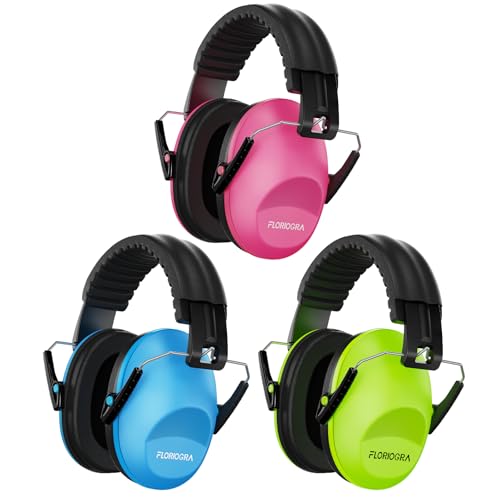
This three-pack configuration supports rotation schedules while maintaining consistent 26dB protection standards.
Floriogra 3 Pack offers a balanced quantity for most family configurations. You get identical 26dB SNR performance across all units, which ensures predictability. The ergonomic arched headband distributes pressure evenly across the crown, and ultra-soft cushions wrap ears completely without gaps. The folding design maximizes portability for spontaneous outings.
Safety certifications validate the attenuation claims independently. Whether for reading, studying, or relaxing in shared spaces, it provides reliable baseline protection without excessive financial commitment. The colors also aid quick identification among siblings or classmates.
This is optimal for families testing hearing protection before making larger investments. Rotation extends product lifespan by allowing rest periods between uses. The comfort level matches single-unit premium models accurately, though it lacks advanced features like specialized padding or custom artwork.
The value proposition peaks at this quantity threshold for most households. The storage footprint remains manageable even with three units present, and washing instructions apply uniformly across the entire set. I’d recommend this as a starting point for newly diagnosed children exploring options.
|
6
|
Floriogra 2 Pack Noise Canceling Headphones for Kids, Kids Ear Protection Earmuffs for Aut |

The two-pack setup enables simultaneous home-school coverage with significant cost savings over buying singles.
Floriogra 2 Pack delivers forty percent savings versus individual purchases. Certified 28dB attenuation protects developing auditory systems reliably. The upholstered design combines safety with acceptable comfort levels. A widely padded headband prevents slippage during active movement, and rotatable cups adapt to varying head circumferences smoothly.
It meets rigorous ANSI and CE testing standards completely. This supports attention training during reading or learning activities and serves as a practical solution for separated custody arrangements or dual residences. It eliminates the risk of forgetting gear through strategic placement redundancy.
This is essential for co-parenting situations requiring duplicate equipment sets. The savings justify keeping emergency spares readily accessible. Comfort suffices for daily commutes and homework sessions, though padding density falls slightly below premium single-unit benchmarks. Color coding helps assign specific pairs to designated locations.
Durability matches expectations for regular rotational use patterns. It’s the best economic choice for committed long-term protection strategies and simplifies logistics for therapists working across multiple venues.
|
7
|
Floriogra 12 Pack Noise Cancelling Headphones for Kids/Toddler Ear Muffs | 28dB SNR Kids E |

This twelve-pack bulk option serves classrooms or therapy groups needing universal access affordably.
Floriogra 12 Pack provides institutional-scale coverage at a sixty percent discount. Uniform 26dB SNR protection ensures equitable safety standards. Durable upholstered construction survives shared-use environments, and padded headbands accommodate diverse student head sizes inclusively. Rotatable cups simplify fitting adjustments for multiple users. Full certification validates safety for educational procurement requirements.
This enables group activities without excluding noise-sensitive participants. The cost-per-unit drops dramatically for budget-constrained programs, streamlining inventory management for special education departments.
This is indispensable for special education classrooms serving multiple autistic students. Bulk pricing makes replacement feasible after loss or damage. Standardized appearance reduces stigma through normalization. Individual comfort varies slightly across mass-produced units, so storage requires dedicated space for the dozen-unit inventory. Hygiene protocols become critical with shared equipment usage.
It’s best deployed with assigned-user labeling systems. This transforms hearing protection from an individual accommodation into a universal resource.
|
8
|
Muted Autism Headphones for Kids, Noise Cancelling Sensory Headphones | For Autism & Senso |

Low-pressure cushions specifically address tactile defensiveness common in autism spectrum disorders.
Muted Autism Headphones engineer comfort for extreme tactile sensitivity. A gentle low-pressure headband eliminates clamping force complaints, and extra-soft cushioned cups avoid triggering defensive reactions. Passive 27dB NRR requires no batteries or charging. Eight color choices empower child agency in selection. Tag-free construction removes common irritation sources entirely.
The lightweight profile prevents neck strain during extended wear, and the adjustable band grows with the child from toddler through teen. It’s a school-approved design that meets classroom safety requirements.
This is a critical option for children rejecting all other earmuff styles. Tactile accommodation takes priority over maximum attenuation specs here. Child-chosen colors increase voluntary compliance dramatically. The lower NRR trades absolute quiet for wearability acceptance. No electronic components eliminate malfunction anxiety completely.
The foldable design maintains portability despite specialized padding. Therapy sessions benefit from reduced transition resistance. It’s worth trying when previous attempts failed due to texture issues.
|
9
|
iClever BTH20 Active Noise Cancelling Headphones for Kids Toddler Travel | SafeSound Tech3 |

Dual-mode ANC offers adjustable pressure for kids sensitive to traditional clamping force.
iClever BTH20 introduces active noise cancelling with sensory considerations in mind. Dual modes allow gentler pressure for sensitive users. SafeSound Tech limits volume to protect developing ears. Sixty-hour battery life supports long travel days reliably. Reinforced materials withstand drops and bends common with kids.
FDA-recognized design validates the safety engineering approach. Bluetooth 5. 4 ensures stable wireless connectivity, and a wired option eliminates battery dependency when needed. It represents a technological advancement in sensory-friendly audio equipment.
Suitable for tech-comfortable children wanting multimedia access safely. Active cancellation excels during airplane travel or car rides. Low-pressure mode accommodates those intolerant of passive clamp force. Battery dependence creates a charging responsibility for parents, and the higher price reflects advanced electronics integration.
Not ideal for water exposure or extreme rough play. Best for controlled environments with predictable power access. It bridges entertainment and therapeutic needs effectively.
|
10
|
ZOHAN Kids Ear Protection 2 Pack, 25dB NRR Noise Cancelling Headphones for Kids, with Pill |
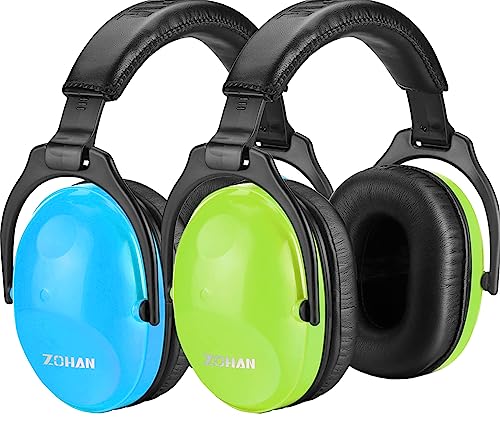
Reinforced pad bonding solves premature failure issues common with active autistic children.
ZOHAN 2 Pack addresses durability failures plaguing lesser models. Reinforced cushion bonding survives rough play and daily abuse. Pillowy pads provide a quiet sanctuary for overwhelmed minds. Metal-free construction eliminates cold-touch shock sensations. 25dB NRR certification ensures legitimate hearing protection. Two-pack strategy covers school and home simultaneously.
Twenty-year brand history indicates proven reliability. One-year warranty replaces broken units without questions. Targets active children destroying fragile alternatives regularly.
Definitive choice for children with destructive motor behaviors. Bonding reinforcement justifies the premium over disposable options. Comfort level supports full-day classroom integration successfully. Spare unit prevents crisis when primary pair breaks. Warranty coverage reduces long-term ownership costs substantially. Weight distribution avoids headache triggers during extended wear.
Less stylish than character-themed competitors but functionally superior. Peace of mind comes from the replaceable guarantee policy.
These ten options span diverse sensory profiles and practical constraints. From bulk classroom packs to specialized tactile-friendly designs, each serves distinct needs. I’d prioritize certified attenuation and genuine comfort over marketing claims. Remember that voluntary compliance matters more than theoretical maximum protection ratings.
Test multiple styles if initial choices fail to gain acceptance.
Building Positive Associations With Ear Protection
Introducing headphones requires patience and strategic timing to avoid creating new aversions. Success depends on associating protection with positive outcomes rather than forced compliance. Gradual desensitization works better than sudden implementation during crises.
Leave earmuffs visible during preferred activities without wearing demands.
Model wearing behavior yourself during calm household moments.
Practice brief thirty-second wears paired with favorite snacks.
Increase duration gradually only during successful positive experiences.
Introduce during mildly stimulating environments before loud events.
Celebrate voluntary initiation regardless of actual wear duration.
Forced application during meltdowns often creates lasting negative associations. Children learn to fear the object itself rather than associating it with relief. Instead, introduce equipment during regulated states when curiosity outweighs defensiveness. Pair initial exposures with dopamine-generating activities like special interests or treats.
Track tolerance thresholds carefully to avoid pushing past comfort zones. Regression happens frequently and requires returning to earlier successful steps. Consistency across caregivers prevents mixed messaging that undermines progress. Document what works to replicate successful conditions systematically. Patience during introduction pays dividends through lifelong voluntary compliance.
Rushing this phase typically extends total timeline significantly.
Maintaining Equipment And Monitoring Fit Changes
Children grow rapidly and sensory preferences shift unexpectedly over developmental stages. Regular assessment prevents ineffective protection or renewed resistance. Maintenance routines extend product lifespan while ensuring hygiene standards.
Monthly Physical Checks
Measure head circumference monthly during growth spurts. Verify ear cup seal integrity by checking for light leaks. Inspect padding compression that reduces effectiveness over time. Replace units showing permanent deformation or cracking foam. Adjust headband tension seasonally as hair thickness changes. Document measurements to predict replacement timing proactively.
Growth acceleration around ages six and twelve requires vigilance. Ill-fitting gear causes discomfort leading to rejection behaviors.
Hygiene Maintenance Routines
Wipe ear cushions weekly with mild disinfectant solutions. Machine wash removable pads according to manufacturer specifications. Air dry completely before reassembly to prevent mold growth. Rotate between multiple pairs to allow thorough cleaning cycles. Inspect hinges and joints for accumulated debris or hair. Replace velcro straps when adhesion fails repeatedly.
Store in ventilated containers rather than sealed plastic bags. Clean immediately after illness exposure or skin infections.
Replacement Indicators By Age Group
| Age Range | Check Frequency | Common Failure Points |
|---|---|---|
| Toddler 2-4 | Every 2 months | Headband stretch, chewing damage |
| Child 5-8 | Monthly | Padding compression, hinge loosening |
| Tween 9-12 | Bi-monthly | Size outgrowth, style rejection |
| Teen 13+ | Quarterly | Aesthetic wear, electronic failure |
Yes, headphones are recommended for autistic children when selected thoughtfully for individual sensory profiles. Start by identifying your child’s specific triggers and tolerance thresholds before purchasing. Try a low-cost single pair first to test acceptance before investing in multiples or premium models.
Involve your child in choosing colors or styles to build ownership and willingness. Monitor comfort and effectiveness regularly as needs evolve with development. Professional occupational therapists can provide personalized fitting guidance if uncertainty persists. Protection should empower participation, not enforce isolation from meaningful experiences.

Leave a Reply